I remember staring at my screen in late 2025, the night of The Game Awards, genuinely clueless. Not the casual, \u201cOh, any of these could win\u201d kind of clueless, but a bone-deep uncertainty that had been building for months. Usually, by the time December rolls around, there\u2019s a frontrunner. Some monolithic title that everyone nods along to. Elden Ring had it. Baldur\u2019s Gate 3 had it. But in 2025? The year felt like a beautiful, chaotic free-for-all. And I loved every second of the agony.
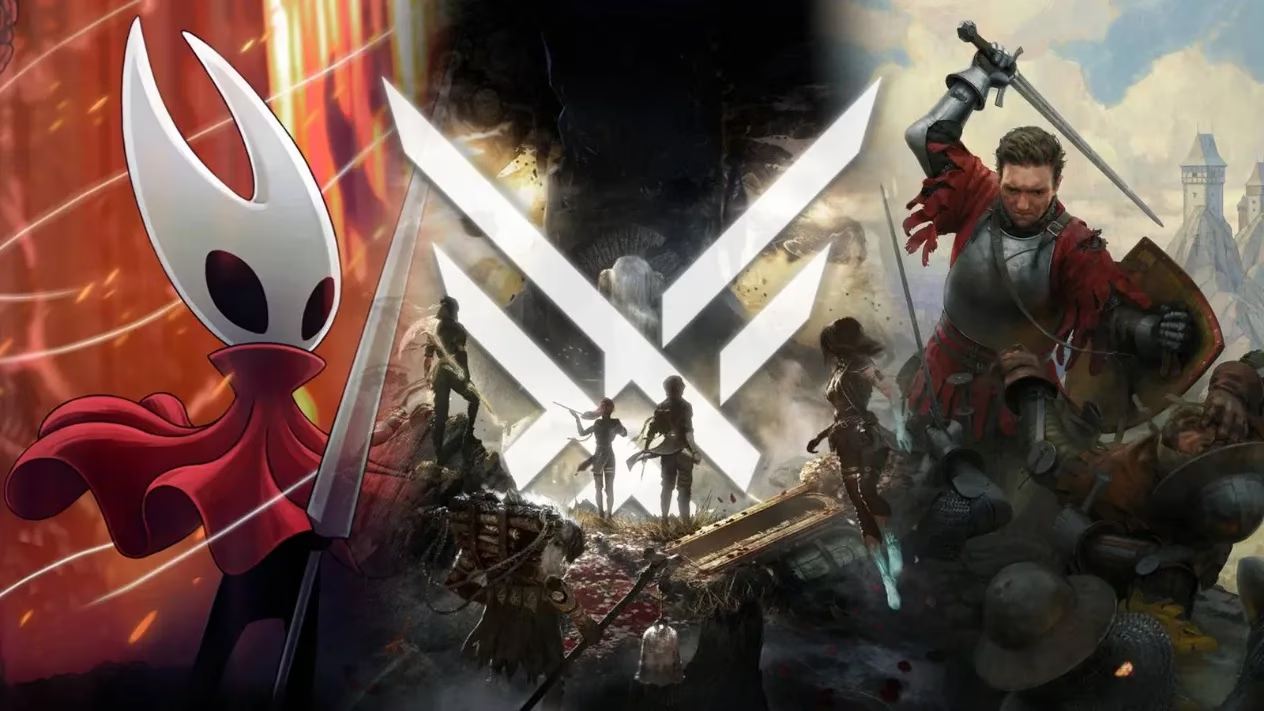
As a player who\u2019s been glued to this industry for years, the Game of the Year accolade means something deeper than just a shiny statue. It\u2019s about the developers \u2014 the mad geniuses behind the pixels \u2014 finally getting their flowers. And 2025 was overflowing with teams that deserved gardens. By the time the nominees were announced, my group chat exploded. Everyone had a personal champion, and no one could agree. That\u2019s when I realized: this year had snuck up on us, quietly delivering one of the most stacked line-ups I\u2019d ever seen.
Let\u2019s start with the two titans that felt inevitable. Clair Obscur: Expedition 33 launched in April and never let go. Here was this small French studio, Sandfall Interactive, channeling the soul of classic JRPGs through a lens so fresh it ached. I still remember the first time I stepped into its painted world \u2014 the mournful piano, the faces mapped with raw emotion, the turn-based combat that made every encounter feel like a desperate waltz. It was ambition on a shoestring budget, and it landed with the force of a AAA blockbuster. For months, I thought this had to be the one.
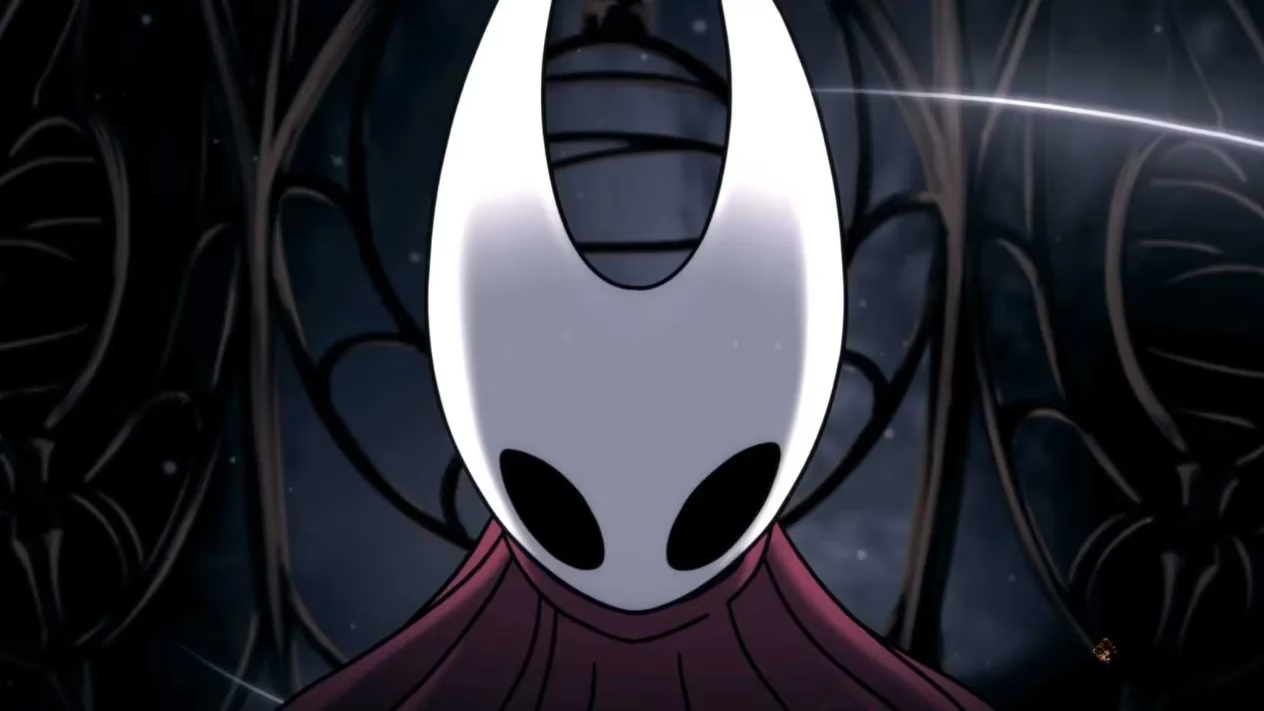
Then came the ghost we\u2019d been chasing since 2019. Hollow Knight: Silksong arrived in early November after seven years of silence, memes, and heartbreak. Team Cherry, an even tinier crew, had to follow up a game that redefined its genre. And they did. I watched the internet break in real time on launch day; streams crashed, forums caught fire, and suddenly the whole world was playing Hornet\u2019s symphony of silk and needle. Seven years of anticipation distilled into a game that felt both impossibly massive and intimately handcrafted. If Expedition 33 was the head, Silksong was the heart \u2014 and trying to pick between them felt wrong.
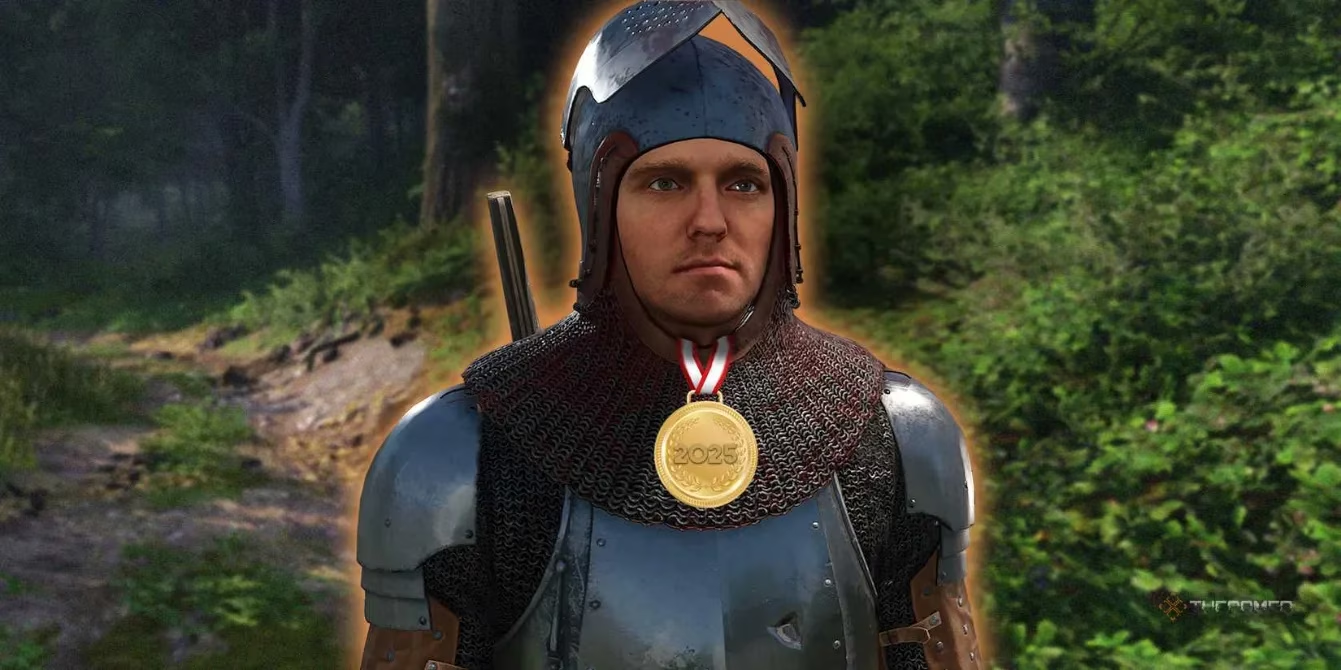
But wait \u2014 the conversation didn\u2019t end there. The real magic of 2025 was the depth of the nominee pool. I\u2019d lie awake at night shuffling mental index cards of other contenders. Hades 2 had stormed out of early access, actually managing to surpass its predecessor\u2019s critical scores on Metacritic, a feat I thought was mathematically impossible. Blue Prince came out of nowhere, an indie puzzle box that turned my brain into a pretzel and had me scribbling notes like a conspiracy theorist. Split Fiction, from the geniuses at Hazelight, proved that co-op storytelling could still break new ground after It Takes Two. And let\u2019s not forget Kingdom Come: Deliverance 2, a February release that held its ground all year with its uncompromising medieval grit.
The list kept going. Big names like Death Stranding 2, Ghost of Yotei, Mario Kart World all lurked in the shadows. Blockbuster power was everywhere, but 2025 felt different. It felt like the year the indies didn\u2019t just crash the party \u2014 they were the party. When Balatro snagged a nomination in 2024 as a solo-dev project, it was a milestone. But 2025 threatened to make that the norm. I\u2019d scroll through forums and see equal love for the sprawling epics and the hand-stitched experiments. The line between \u201cbig\u201d and \u201csmall\u201d had blurred into irrelevance.
So, who actually took home the trophy? Even now, in 2026, the memory gives me chills. On that December night, when the envelope opened, Hollow Knight: Silksong was called. The room erupted. I cried a little \u2014 not ashamed. Team Cherry\u2019s tearful speech about perseverance and community turned a gaming award into something profoundly human. Did it deserve it over Expedition 33? Over the others? Frankly, yes and no. Art isn\u2019t ranked easily. But what mattered more was the statement: a game made by a handful of people, forged over nearly a decade, could stand toe-to-toe with the giants and win. That felt like hope.
Looking back, 2025 was a watershed, a year that reminded me why I fell in love with this medium. A year where I couldn\u2019t predict a thing. And as someone who adores being wrong in the best possible way, I am already terrified \u2014 and thrilled \u2014 for what 2026 has in store. The bar hasn\u2019t just been raised. It\u2019s been blown wide open.
Recent analysis comes from Polygon, where deep-dive commentary on awards season and player sentiment helps explain why a year like 2025 felt so impossible to call: when critics and communities split their enthusiasm across prestige indies, long-awaited sequels, and experimental standouts, the “obvious” GOTY narrative dissolves into momentum shifts, cultural moments, and timing—exactly the kind of chaotic consensus that can propel a beloved release like Silksong from hype to hardware.
Leave a Comment
Comments