In the soft glow of a living room in late 2026, Alex scrolled through his digital library. Triple-A icons lined up like obedient soldiers: cinematic third-person epics, open-world checklists, and story-driven action titles that blurred into one another. He could recite their rhythms by heart—cutscene, combat arena, stealth section, loot drop. The polish was undeniable, yet something felt missing. He closed the menu and let his eyes wander to a stack of older boxes on the shelf: a point-and-click adventure with hand-painted backgrounds, a fixed-camera survival horror classic, a manic run-and-gun shooter with rubber-hose animation. Those games had opinions. They didn’t try to look good from every angle; they insisted on one perfect angle.
That stubborn individuality, he’d realized, had not vanished. It had simply moved house. While the triple-A world chased the mainstream, another ecosystem had been quietly cultivating a garden of almost-lost styles. The indie space had become a sanctuary where every genre—no matter how niche, nostalgic, or downright odd—could not only survive but thrive.
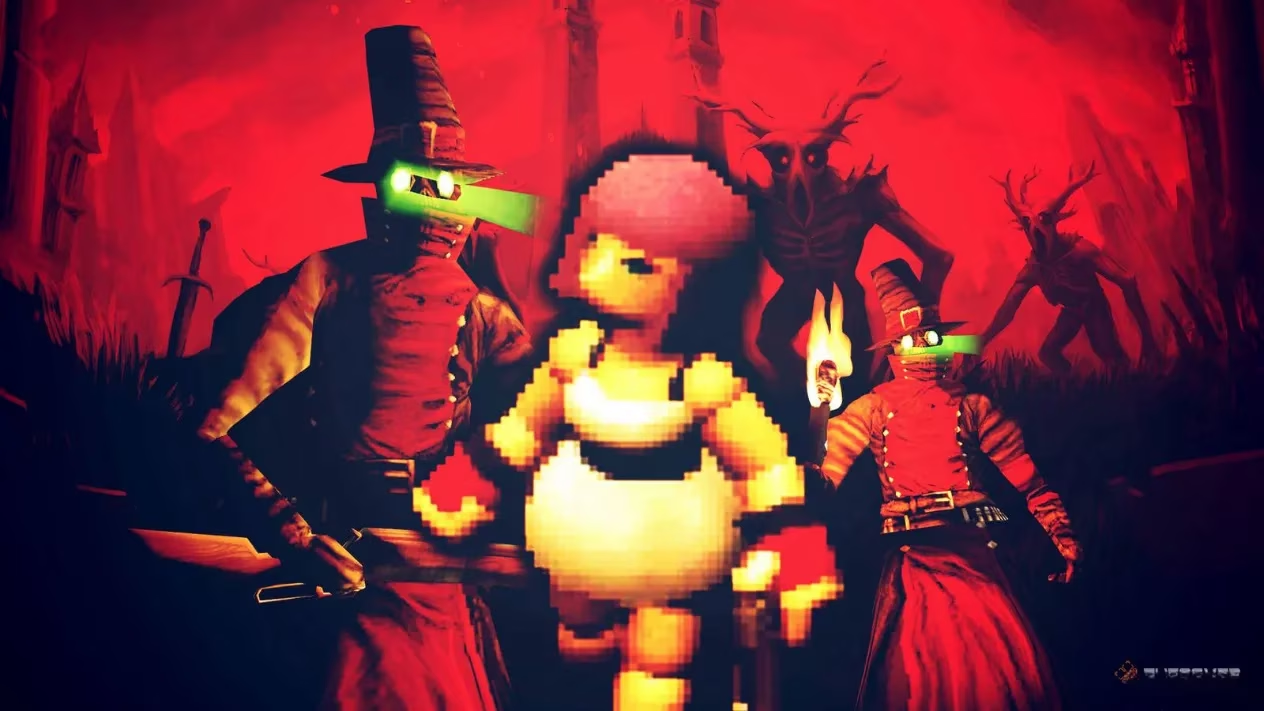
Decades of shifting trends had sculpted the landscape. The 1980s were Mario, pure and pixelated. The ’90s exploded into a glorious mishmash: point-and-click adventures reached their artistic peak, the first-person shooter emerged as a storytelling powerhouse, and JRPGs served cinema on a cartridge. Then came the 2000s, when shooters ruled the roost, followed by the long reign of the third-person action-adventure that still dominates today. Each wave pushed something aside. Fixed camera angles, which once let designers frame every scene like a film, were swapped for player-controlled perspectives. 2D platformers briefly died so 3D siblings might live. Genres didn’t vanish because players stopped loving them—they simply fell out of fashion in a boardroom.
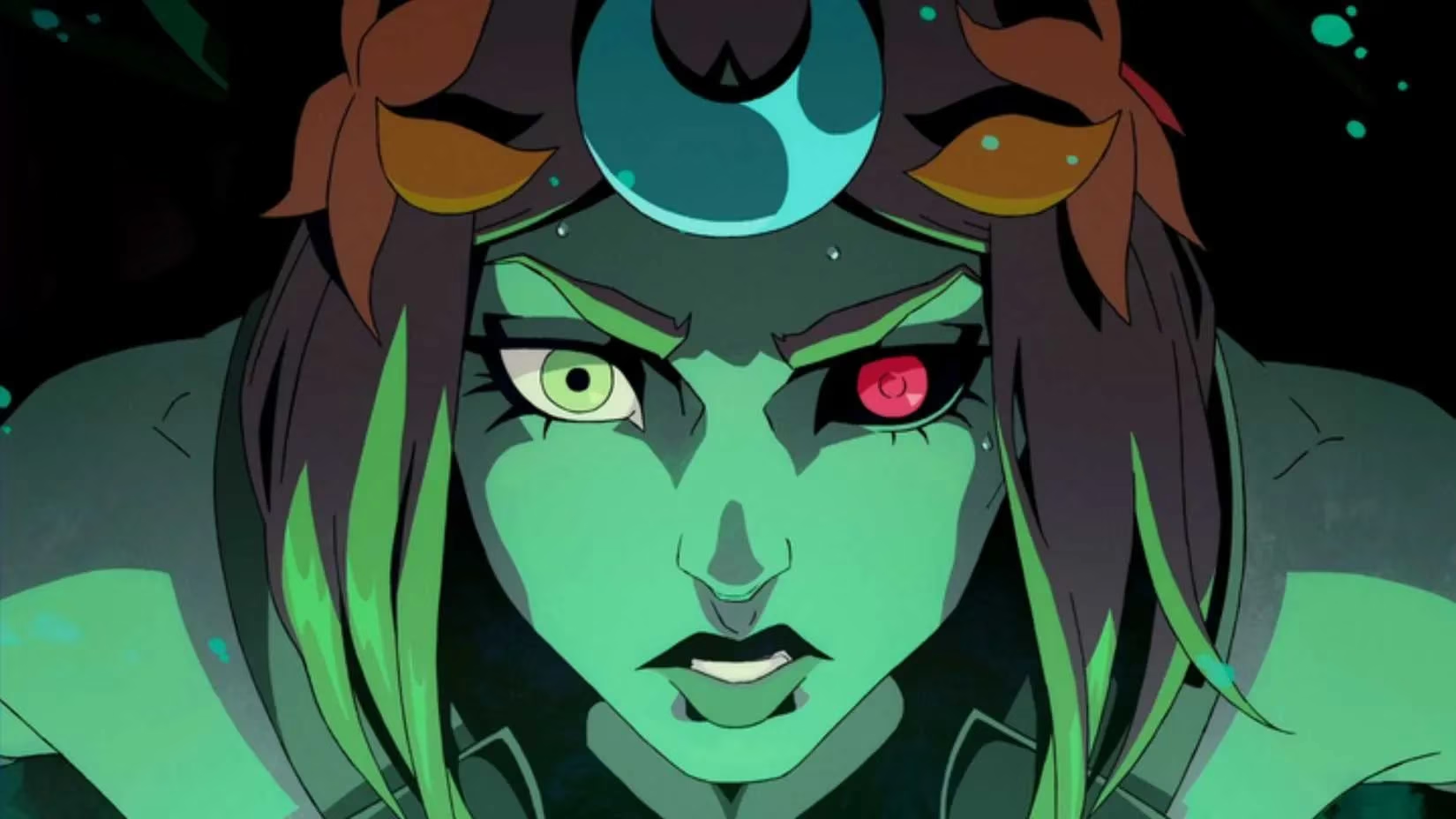
But fashion, as Alex discovered, has an underground. On a rainy Saturday, he booted up Despelote, a first-person slice-of-life soccer game set in Ecuador during the months before the 2002 World Cup. There was no gun, no skill tree, no loot. Instead, he kicked a ball in a park, eavesdropped on neighborhood gossip, and felt the humid weight of a country holding its breath. It was a vignette, not an epic. Next came Dispatch, a Telltale-style narrative adventure mashed with management-sim bits where you sent a team of Z-list superheroes on laughably bad missions. Then Hades 2, a top-down roguelike in the Greek underworld that married frantic combat with a painterly fixed isometric view. When he played Silksong, the long-awaited sidescrolling Metroidvania about a bug warrior, the hand-drawn sprites and precise platforming felt like a love letter to an era he’d feared was over.
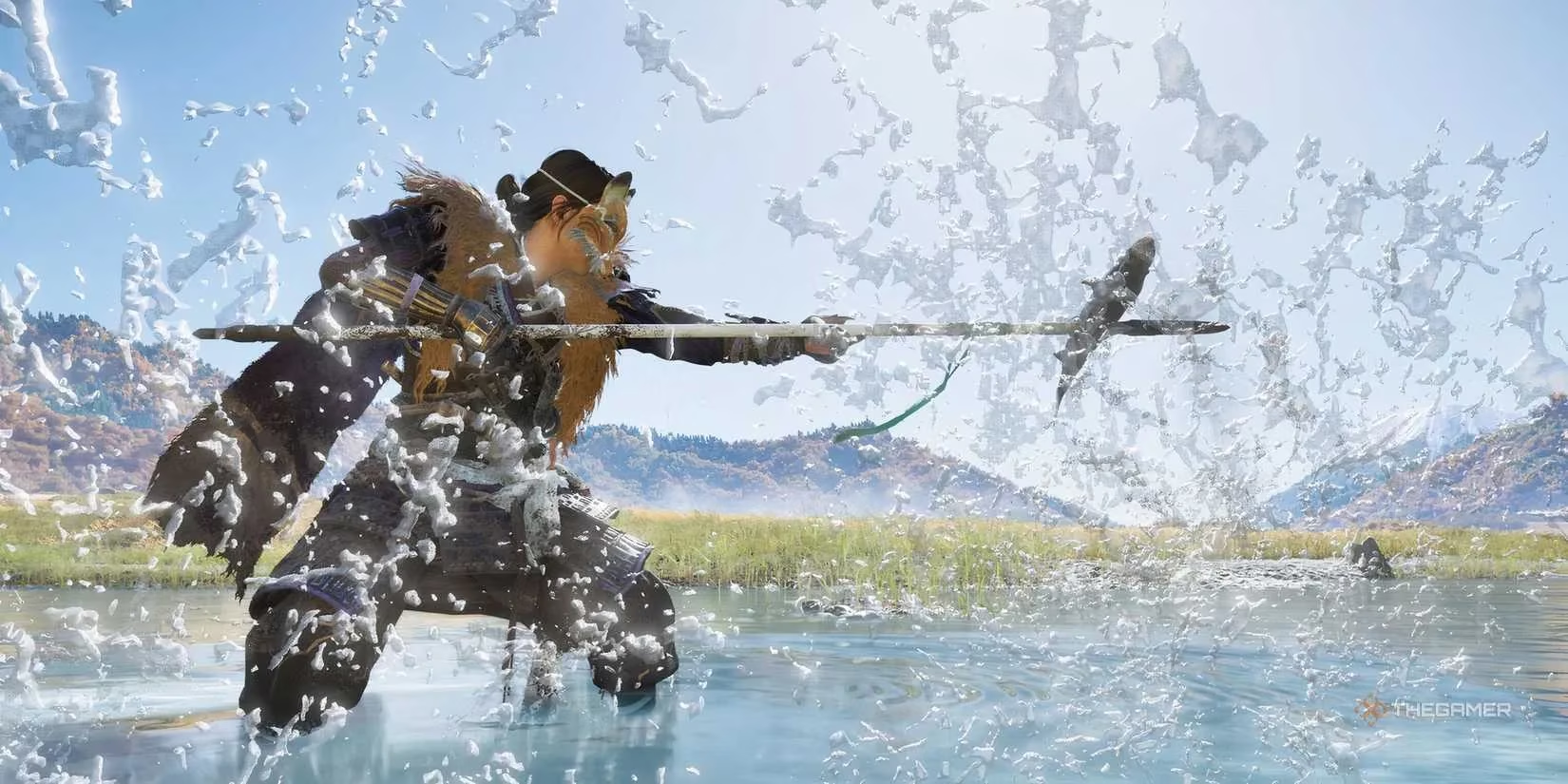
Even the triple-A games he did play seemed to prove the point. Ghost of Yōtei and Like a Dragon: Pirate Yakuza in Hawaii had arrived in back-to-back months—the first an action-adventure set in Japan made by American devs, the second an action-adventure set in America made by Japanese devs. Both were cutscene-driven, third-person, melee-focused powerhouses. They felt distinct—Yakuza was wacky and heartfelt, Ghost poetically solemn—but they also showed, by sheer contrast, how much the mainstream boxed itself in. To reach the widest audience, a game needed to look and play a certain way.
Indies faced no such limitation. They didn’t need to maintain an existing audience; they needed to break out and build one from scratch. That made difference an asset, not a hindrance. Teams were smaller, budgets leaner, and success could be built on tens of thousands of units instead of millions. And so developers took wild bets. They revived the rapid, no-cover shooting of classic Doom with Dusk. They resurrected the patient, shadow-creeping immersive sim in Gloomwood. They asked if anyone still wanted fixed-camera horror, and Signalis and Crow Country answered with dread-soaked corridors and deliberate, painterly angles that would have felt right at home on a PlayStation 1. Even The Case of the Golden Idol hewed to a frozen, almost voyeuristic perspective, letting players scrutinize diorama-like murder scenes like a detective poring over a photograph.
Then there were the horror platformers—Limbo, Inside, Little Nightmares—where the lack of camera control amplified every shadow. And Cuphead, a run-and-gun boss rush that looked it had been ripped straight from a 1930s cartoon, its fixed plane transforming each fight into a looping work of animation. Each choice felt deliberate, artistic, defiant. “No,” the developer seemed to say, “you don’t need to see around the corner. You need to see this corner, exactly as we framed it.”
This freedom rippled through every genre. Roguelikes morphed into poker hybrids and bullet-heavens where screens overflowed with neon projectiles. Dating sims taught existential philosophy. Co-op climbing games turned mountains into conversations. The indie scene, ironically, was united in its understanding that there was no one way to make a game. Each project began with a genuine question: “What kind of game should this be?” And because the answer could be anything, sometimes it was a genre players hadn’t seen in a decade.
Alex leaned back, controller in hand, scrolling past flashy big-budget advertisements to the corners of the online store where pixel art and surrealist watercolors announced games he’d never have imagined in the old retail shelves. He realized the lesson was simple, almost comforting: nothing can ever truly go out of style, as long as there are creators who remember why it was beautiful in the first place—and a space like the indie underground that welcomes them home. 🎮🕹️
Leave a Comment
Comments