As a dedicated gamer who spends more time in digital worlds than I sometimes care to admit, I've come to realize that the true magic of our medium often hums quietly beneath the roar of blockbuster marketing campaigns. Looking back at 2025, it wasn't the heavily advertised AAA juggernauts that left the most indelible marks on my memory; it was the collection of fiercely creative, passionately crafted indie games that truly defined my year. These experiences felt less like mass-produced products and more like secret notes passed between kindred spirits, each one offering a unique perspective and a deeply personal touch. While the industry giants battled for market share, these smaller studios were busy building worlds that resonated on a profoundly human level, proving that innovation and heart often flourish best outside the corporate spotlight.
Crafting a definitive list is a fool's errand—taste is as subjective as it gets—but I can share the journeys that captivated me. My process involved diving deep into community hubs, sifting through player testimonials, and of course, logging hundreds of hours of personal playtime. While one of my personal cozy favorites was the delightful Gemporium, the titles that rose to the top this year did so through a combination of critical acclaim, overwhelming player love, and that intangible "it" factor that makes you cancel plans just for one more run.
The Rising Stars & Addictive Loops
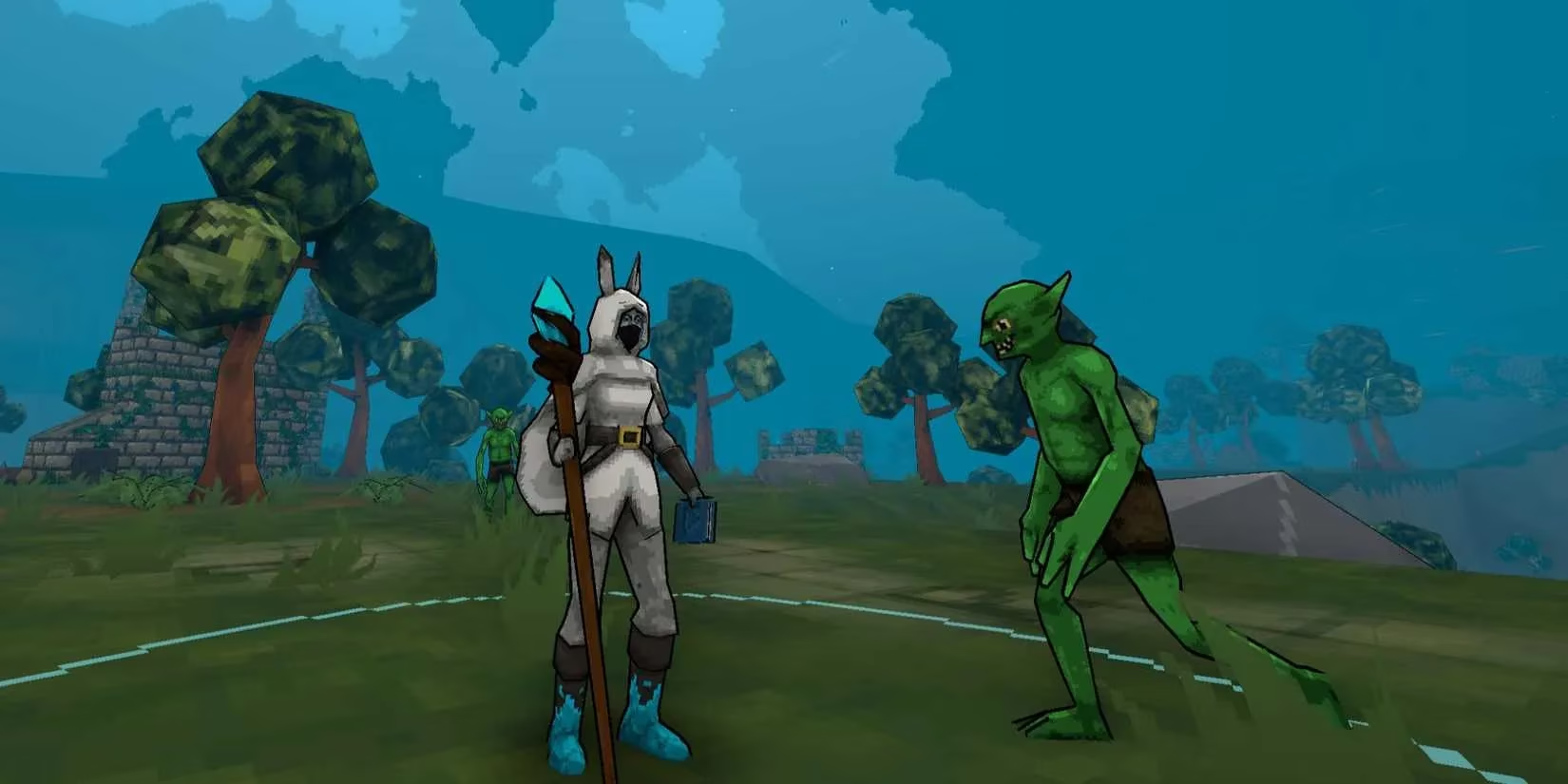
The year kicked off with a bang of chaotic fun courtesy of Megabonk. Launching on September 18th for PC, this game was like a sugar rush in digital form—a vibrant, 3D reimagining of the Vampire Survivors formula that had me hooked from the first minute. Its developer, Vedinad, made headlines by voluntarily withdrawing from The Game Awards' "Best Debut" category due to past projects, a move that only amplified the community's respect. And for good reason! The Steam reviews tell the story: an "Overwhelmingly Positive" rating born from pure, unadulterated fun. Playing it felt like conducting a symphony of destruction where every instrument was a neon-colored projectile.
For those seeking a gentler pace, Tiny Bookshop was a balm for the soul in 2025. In a year that felt light on truly cozy games, this title was a warm cup of tea. The premise is beautifully simple: run a mobile bookshop, selling real-world classics from beaches to parks. There was something profoundly satisfying about matching a customer's request for a gothic novel with a copy of Frankenstein. Our ScreenRant review nailed it, saying the in-game shelves sparked a real urge to revisit forgotten titles. With scores of 9/10 from us, an 82 on OpenCritic, and an 81 on Metacritic, its quality is undeniable. It's currently a digital darling on PC and Switch, with a physical Switch release and PS5 version coming soon.
Roguelikes, Roguelites, and Relentless Action
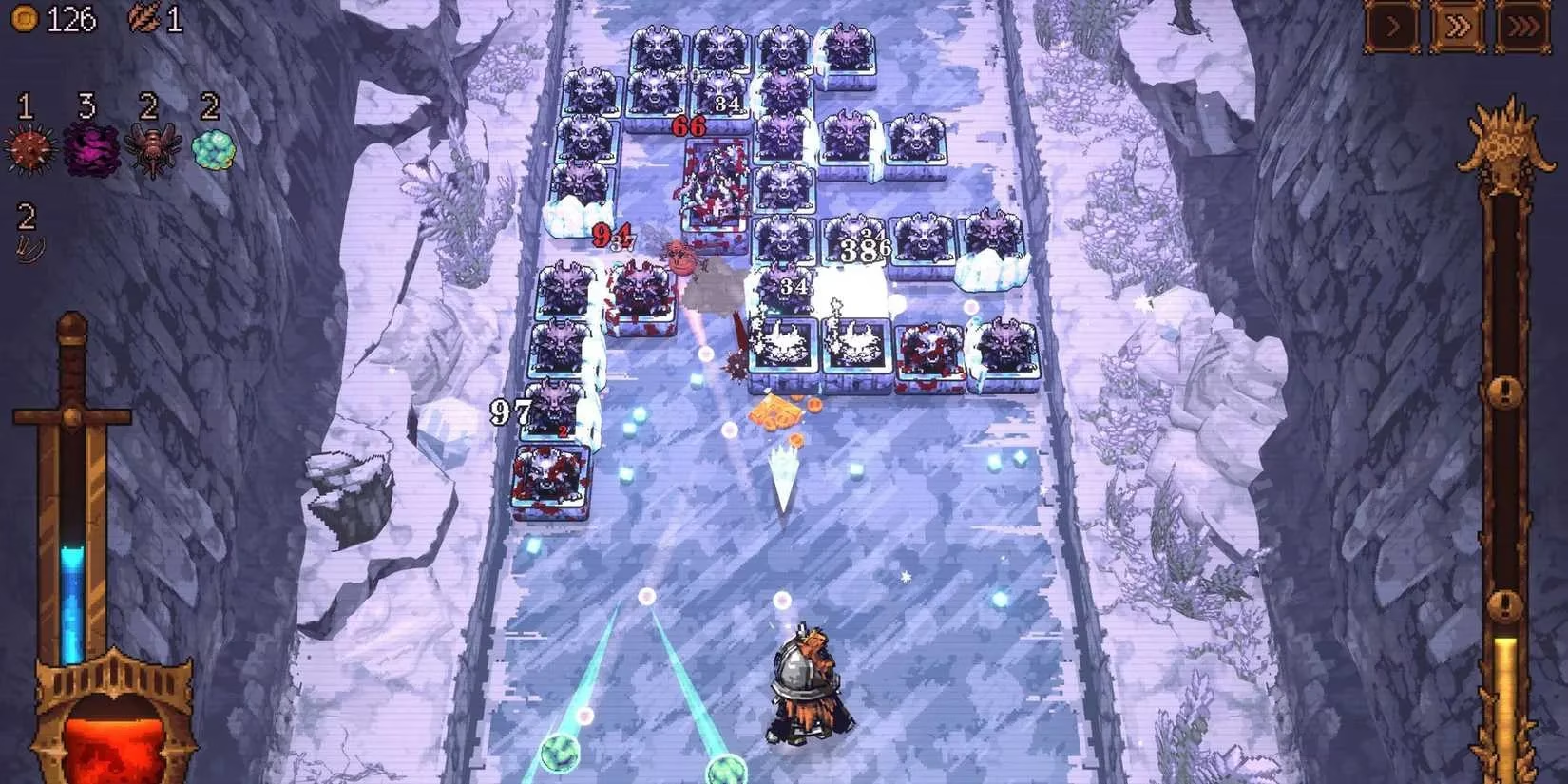
If you crave velocity, Ball x Pit was your game. This fantasy roguelite tasks you with plunging into a seemingly bottomless abyss, growing stronger and building a community called New Ballbylon along the way. Our writer Kyle Gratton described it perfectly: it starts simple but "quickly spirals out of control with all the variety you uncover." I lost many hours to its addictive loop, each descent feeling like dropping a stone into a dark well and listening for a new, strange echo. Available on virtually every modern platform, it boasts a solid 80 Player Rating on OpenCritic.
Then came Absolum, a game that blended side-scrolling beat 'em up action with roguelike progression so seamlessly it felt like rediscovering a beloved genre. The combat was satisfyingly chunky, but it was the world that gripped me. Leo Faierman's 8/10 review praised its "confidently crafted world" and "gorgeously animated aesthetic," and I wholeheartedly agree. It was like stepping into a long-lost Saturday morning cartoon that had matured alongside its audience. With a Metacritic score of 86 and a user score of 8.2, it found a passionate fanbase on PC, PlayStation, and Switch.
Narrative Depth & Artistic Innovation
2025 also gifted us titles that blurred the lines between game and art. Despelote was one such miracle. Using a striking art style built from real photos and audio from Quito, Ecuador, it's less a soccer game and more a first-person slice-of-life adventure about childhood and community. Dribbling a ball through those streets as the nation's World Cup hopes hung in the balance was an experience unlike any other—a poignant reminder that games can be powerful cultural capsules. Its Metacritic score of 89 and overwhelming positive reviews are well-earned.

For mystery lovers, The Seance of Blake Manor offered a gothic, supernatural detective story set in 1897 Ireland. As PI Declan Ward, investigating a haunted hotel for a missing woman felt like wandering into a beautifully illustrated Victorian ghost story. The comic-book style art and first-person puzzling created an atmosphere as thick as Irish fog. Its quality is reflected in a stunning 94% Critics Recommend score on OpenCritic.
The narrative innovation award, however, might go to Dispatch. This superhero workplace comedy, released in eight episodic chapters, put the power of choice squarely in the player's hands. Playing as a former hero turned dispatcher for reformed villains, every dialogue choice and mission assignment rippled through the story. It featured top-tier voice acting and achieved the almost mythical feat of a 100 Player Rating on OpenCritic, alongside a 96% Critics Recommend score. It's a masterclass in interactive storytelling.
The Crown Jewels of 2025
And then we have the trio that dominated conversations: the titans.
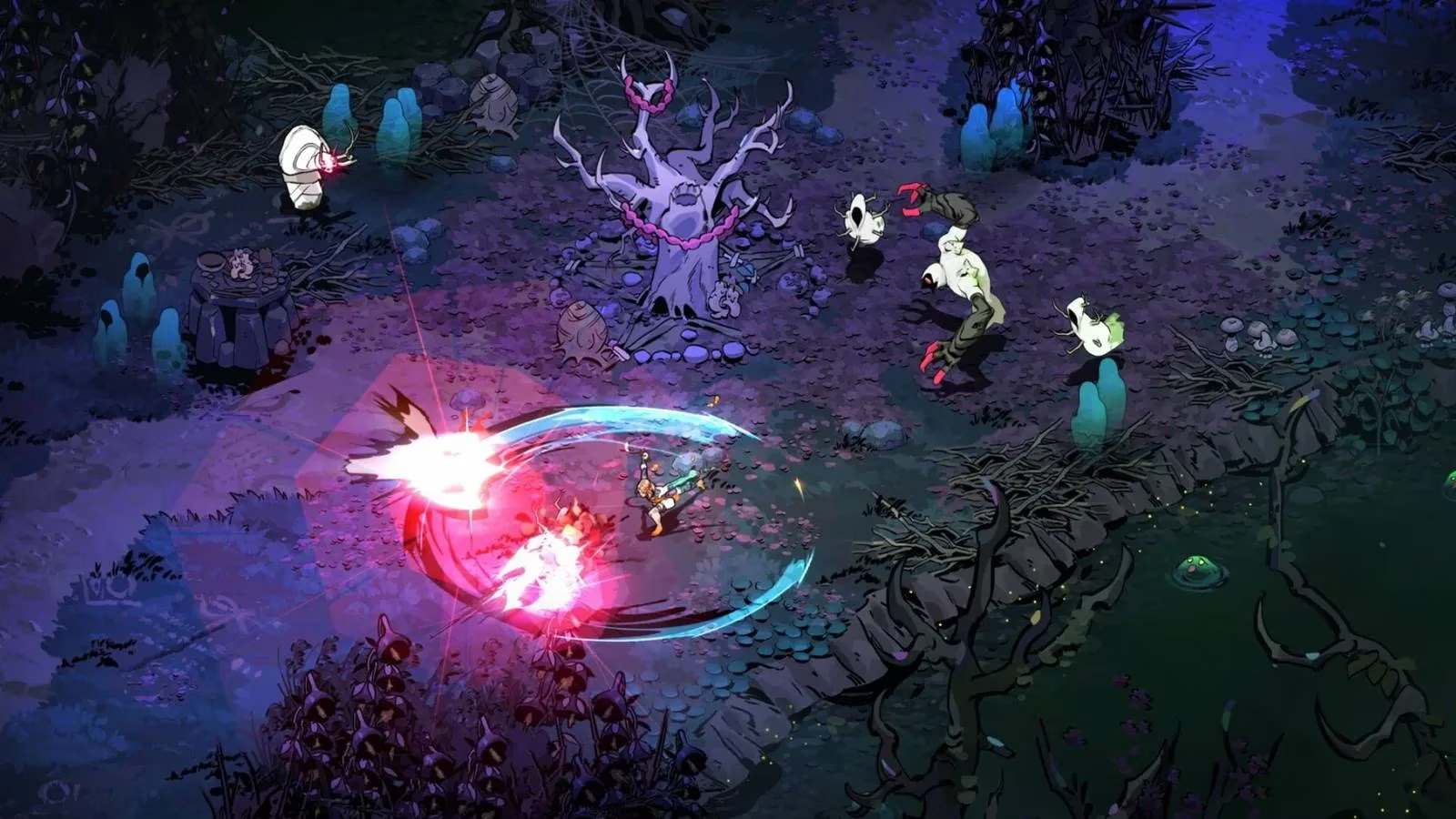
Hades 2 emerged from Early Access in September 2025 as a full-fledged masterpiece. Taking control of Melinoë, daughter of Hades, to battle the Titan Kronos, it expanded everything that made the original great. Our site gave it a 10/10, with Chris Carter noting the world felt "so much bigger" and "living, breathing." It also achieved a perfect 100 Player Rating on OpenCritic and a Metascore of 95. Each escape attempt felt like unraveling a new thread in a rich, familial tapestry of Greek myth.
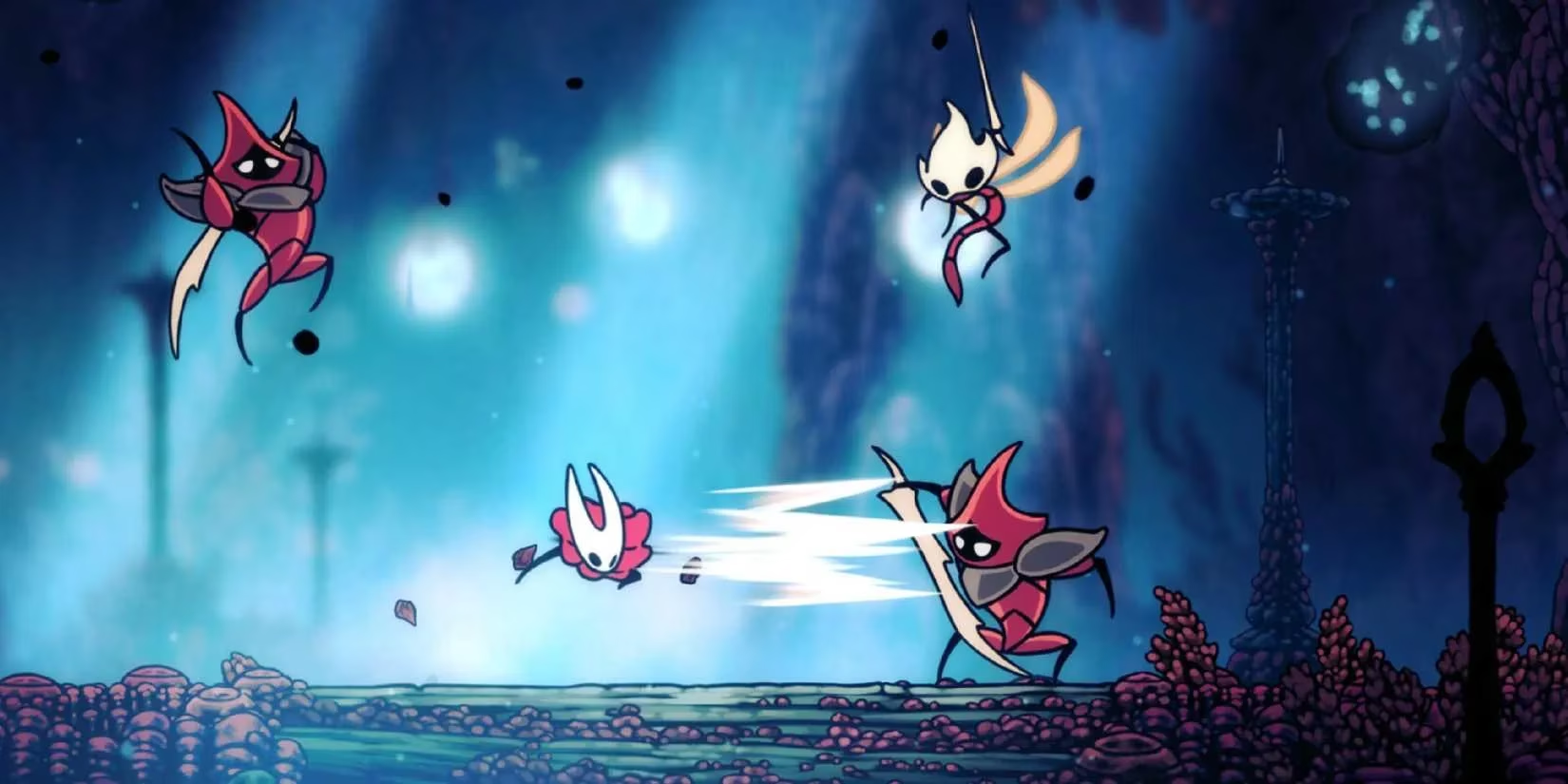
The long-awaited Hollow Knight: Silksong finally arrived and proved every second of the wait was justified. Playing as Hornet in a vast, cavernous kingdom was a challenging, beautiful, and deeply rewarding experience. Despite some initial discourse about its difficulty, its quality was undeniable: a 10/10 from ScreenRant, a Metascore of 90, and 97% Critics Recommend on OpenCritic. For me, the highlight was the wandering bard, Sherma—a cheerful singing pilgrim whose melodies became the soundtrack to my exploration.
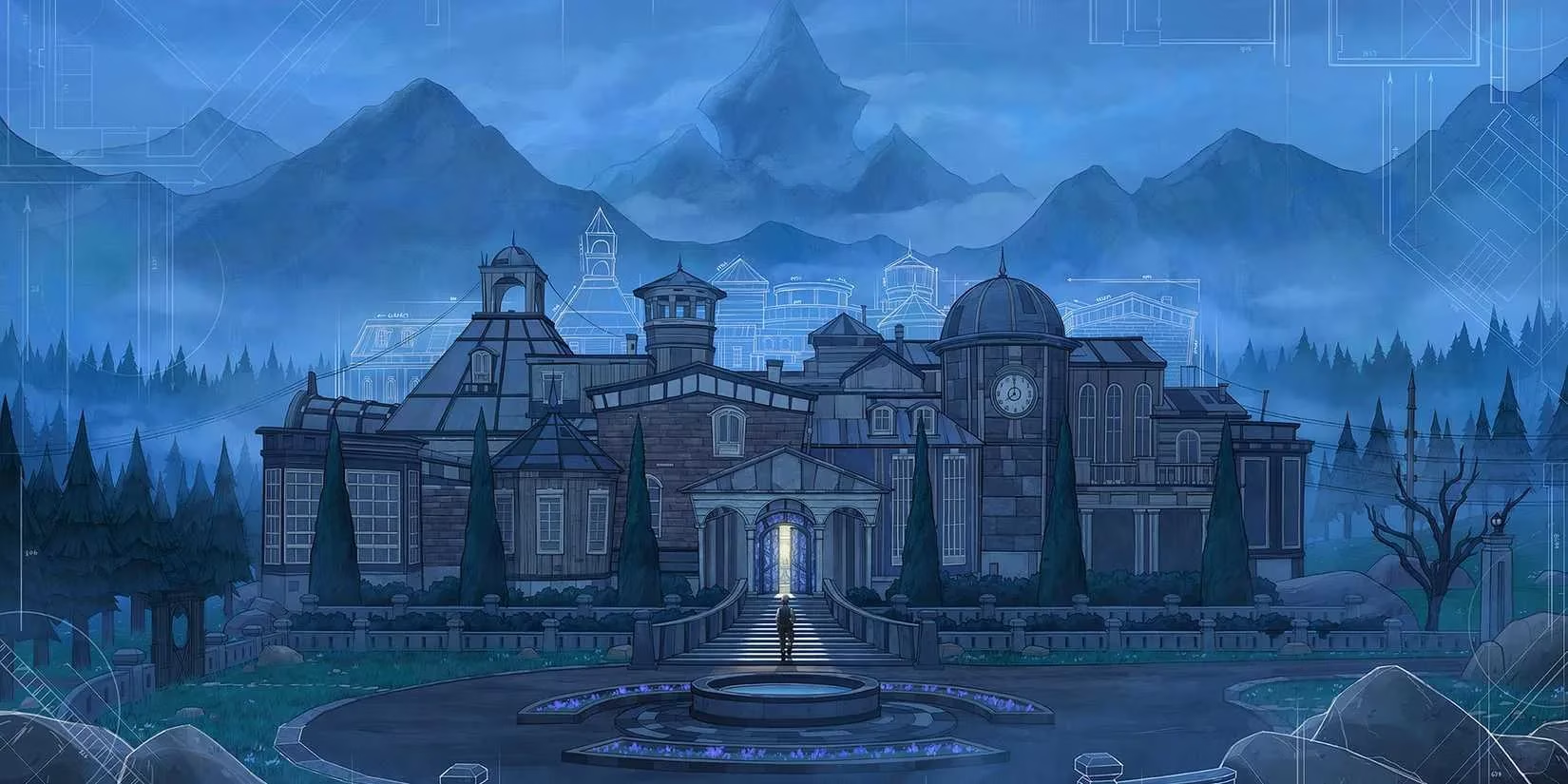
But the game that haunts my thoughts, the one that felt like solving an endless, beautiful riddle, was Blue Prince. This wasn't just a game; it was an obsession. Inheriting a mansion where the rooms rearrange daily in a search for the mythical Room 46 required not reflexes, but intellect and meticulous note-taking. Its puzzle mechanics were as deep and shifting as the house itself, creating an experience that lingered in my mind like a half-remembered dream. Choosing a "best" among these three giants is like choosing a favorite star in a clear night sky, but for its sheer, uncompromising originality and depth, Blue Prince stands as my personal indie game of the year. It was a testament to the power of a single, brilliant idea executed to perfection—a locked-room mystery where the room itself was the universe. These games, from the chaotic fun of Megabonk to the profound quiet of Blue Prince, didn't just entertain me in 2025; they reminded me why I fell in love with gaming in the first place.
Leave a Comment
Comments