In an era where video game prices frequently climb past the $70 mark, the announcement of Hollow Knight: Silksong's $20 price point sent waves of disbelief through the gaming community. Many fans and industry observers expected the highly anticipated sequel to command a premium, given the monumental success and critical acclaim of the original Hollow Knight. However, as revealed in recent commentary from Team Cherry's co-lead Ari Gibson, the studio's philosophy remains firmly rooted in delivering value at an accessible cost. Gibson's remarks, part of a broader discussion featured in ACMI's paperback Hollow Knight: Silksong guide, suggest the team never seriously considered a higher price tag, viewing their approach as simply "reasonable." This stance is as refreshing as finding a hidden oasis in a digital desert, challenging industry norms with a quiet confidence.
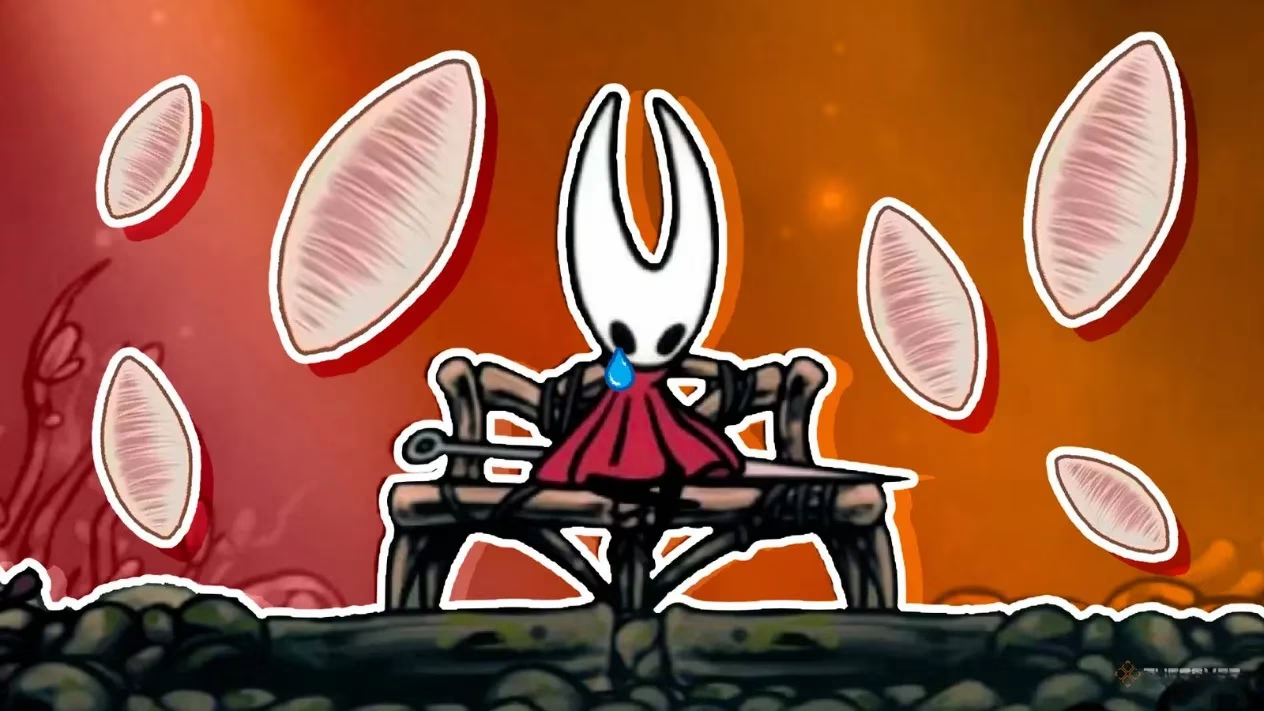
The Philosophy Behind the Price
Gibson's explanation cuts through the noise of modern gaming economics. "We try to price the games at a reasonable level for people, and we have quite a habit of expanding the content to be quite large," he stated. This combination of modest pricing and ambitious scope created what Gibson described as an "inevitable" outcome: the project's sheer scale and value eventually demanded recognition as a standalone title, rather than downloadable content for the original game. The decision to craft a full sequel, therefore, was intrinsically linked to maintaining their affordable pricing model while delivering an experience substantial enough to justify a new release.
Content Expansion and Perceived Value
The developer's commentary implies a direct correlation between the game's scope and its final price. Gibson suggested that if Hornet's adventure had been smaller, the cost would have been adjusted accordingly. This stands in stark contrast to an industry where price often seems disconnected from scope or development cost. For Team Cherry, the $20 tag reflects a belief in fair exchange—a substantial, high-quality product for a modest sum. This approach is as precise and deliberate as a master watchmaker assembling a complex timepiece, where every component of cost, content, and value is carefully balanced.
Industry Context and Player Impact
To appreciate Team Cherry's stance, one need only look at prevailing industry trends. The article contrasts Silksong's price with other gaming expenditures, noting that purchasing all content for a typical "Trails-series" JRPG can easily exceed $110. While acknowledging that larger studios may have different financial pressures—"Falcom probably needs the money far more by comparison"—the implication is clear: Team Cherry prioritizes player accessibility over maximum profit extraction. In a landscape where special editions and microtransactions are commonplace, this philosophy feels like a meticulously restored vintage fountain pen in a world of disposable ballpoints—a tool crafted for purpose and longevity, not just immediate gain.
Gibson's perspective reframes the conversation around game pricing. Rather than asking "Why is Silksong so cheap?" the more pertinent question might be "Why are other games so expensive?" The $20 price point is not presented as a grand gesture or a loss-leading strategy, but as the logical result of a studio committed to its principles. For players, this means accessing what early previews suggest is a vast, intricate, and polished sequel without the financial barrier that often accompanies games of similar ambition.
Key Takeaways from Team Cherry's Pricing Strategy:
-
Value-Centric Development: Content scope directly influences pricing decisions.
-
Player-First Mentality: Accessibility and fairness are core tenets.
-
Industry Contrast: Highlights the disparity between indie and mainstream pricing models.
-
Authentic Communication: The explanation is straightforward, without marketing spin.
The Ripple Effect in 2026
As of 2026, Team Cherry's approach continues to resonate. In an industry increasingly scrutinized for monetization practices, Silksong's pricing stands as a benchmark for consumer-friendly policies. It demonstrates that commercial success and player goodwill are not mutually exclusive. The studio's model suggests that trust and quality, when paired with fair pricing, can forge a powerful connection with an audience—a connection that often translates into lasting loyalty and advocacy.
Ultimately, Ari Gibson's comments reveal more than just a pricing decision; they offer a window into Team Cherry's operational ethos. The studio builds worlds with the care of a master cartographer charting unknown lands, where every detail matters and the journey is valued as much as the destination. Hollow Knight: Silksong's $20 price is not an anomaly or a promotional stunt, but a declaration of intent—a promise that the experience within is worth far more than the cost of entry, and that the creators believe their players deserve nothing less.
Leave a Comment
Comments