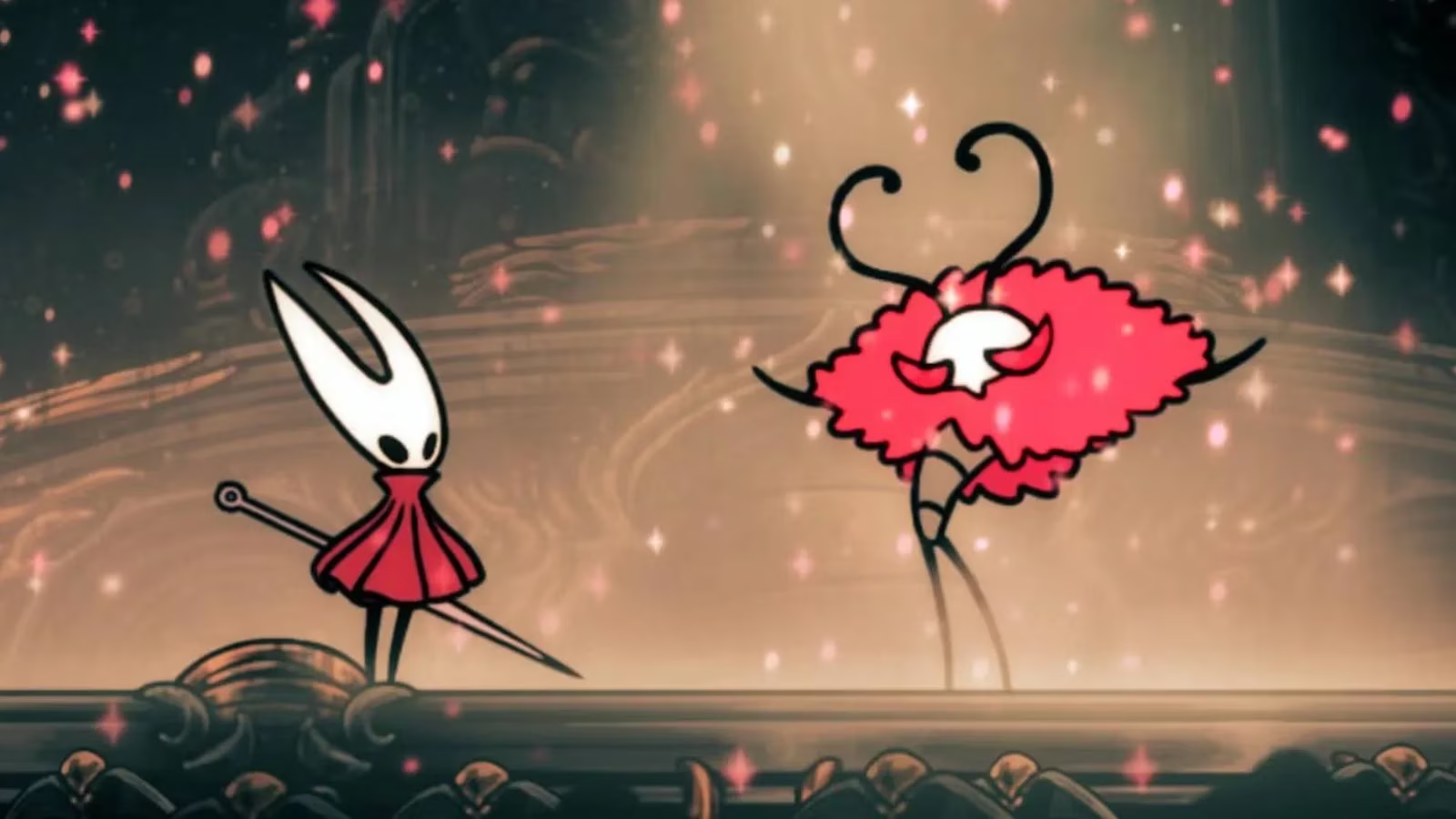
I still remember the exact moment Lace first eviscerated me. It wasn’t a close fight—it was a ballet of crimson silk and shattered ego. By September 2026, Team Cherry’s Hollow Knight: Silksong has been in my rotation for a full year, and even now, I can close my eyes and trace every one of its cathedral chambers from muscle memory alone. The game that consumed our hearts when it shadow-dropped (well, not quite shadow-dropped, but more on that soon) still feels monumental, even after countless patches and a vibrant modding scene that gave us everything from easy-mode charms to a randomizer that swaps Hornet’s needle for a fishing rod. Yet nothing, absolutely nothing, prepared me for the bombshell that surfaced in late 2025: the Silksong we conquered was a merciful downgrade. The true, primitive version dreamed up during playtesting would have melted our controllers.
I first caught wind of this revelation while listening to the Dan Allen Gaming Podcast, deep into a night when I really should have been asleep. Voice actor Matt Trobbiani—who you probably know best as the theatrical, slightly unhinged Trobbio—let slip something that made me pause mid-sip of cold tea. Trobbiani hadn’t just lent his vocal cords to the kingdom of Pharloom; he had been one of Team Cherry’s core playtesters, one of the first humans ever to witness the True Ending. And according to him, that ending was guarded by absolute nightmares. “It was almost entirely nerfs to the bosses that I got put in,” he admitted, and I could hear the wince in his voice. “It was much harder when I did it!”
Can you imagine? The boss fights that already had us hurling proclamations of injustice into the void—the rematch against an older, crueler Hornet prototype, the coral-encrusted leviathans of the Deep Docks, the final dance with the Bell Keeper—were the gentle versions. The playtest builds apparently featured attacks with fewer anticipatory frames, meaning the window between seeing an incoming strike and actually dodging it was even tighter. Trobbiani hinted that several encounters originally lacked the subtle visual tells we now take for granted: a twitch of a stinger, a glow on the floor. Without his feedback, we would have been reacting to raw instinct alone.
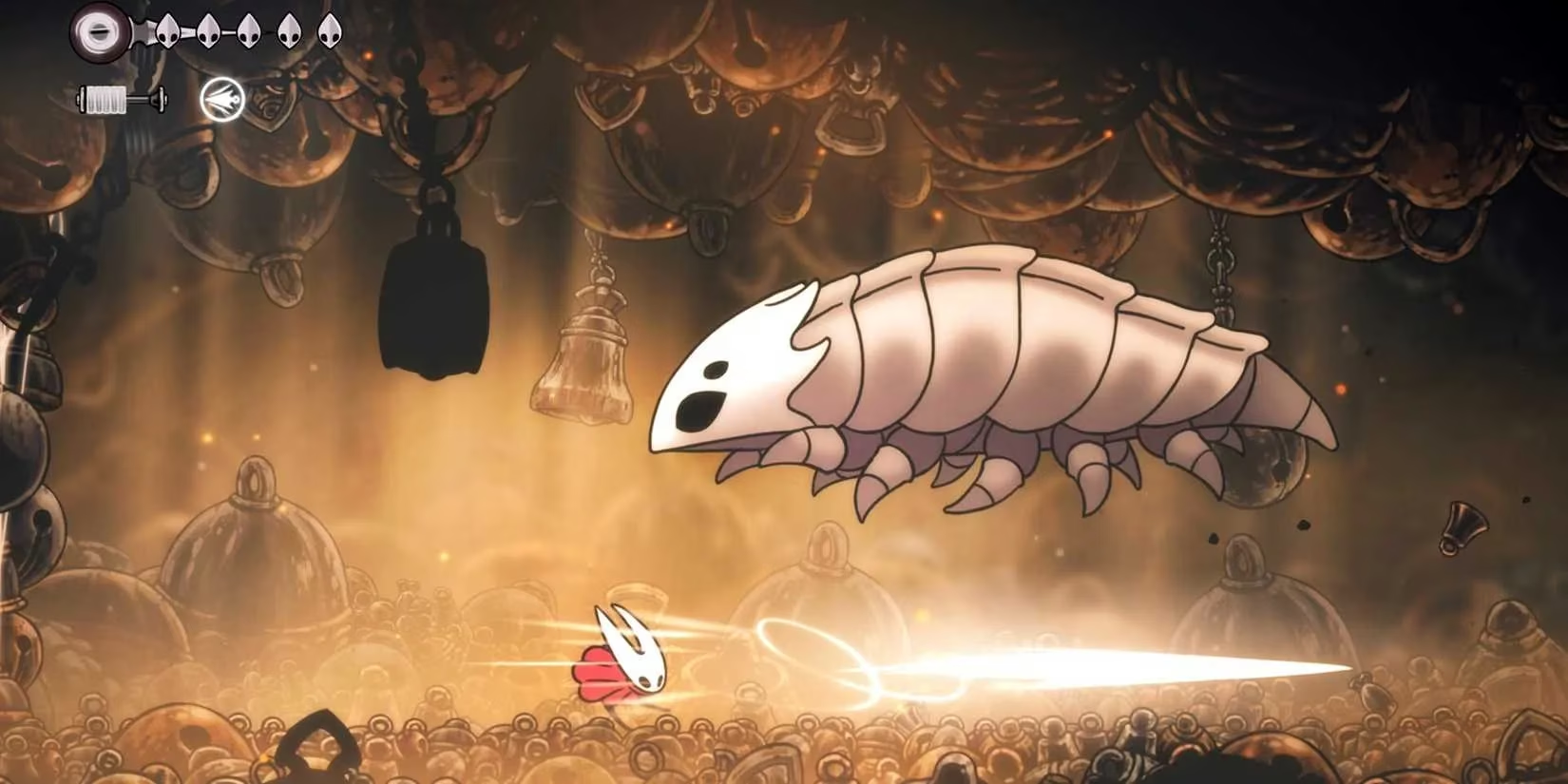
This scales of difficulty rattling sent me back into Silksong with fresh eyes. I loaded an old save file, stood before the towering Husk Knight that guards the Coral Crown, and dissected every one of its attacks. Sure enough, I spotted the tiny preparatory frame—a half-second shudder of the shoulder—that Trobbiani’s feedback might have added. Had it not been there, dodging that sweeping lance would have been a game of pure prediction. And that’s the fascinating thing: Team Cherry wasn’t interested in unfair punishment. They were searching for a balance point where mastery feels earned, not gifted. Every playtest session brought a “little different” build, as Trobbiani put it, proving that the team had been meticulously shaving off spikes of frustration until the edge was sharp but not sadistic.
Why does this matter in 2026, a full year after launch? Because knowing about the unseen pain lifts the entire experience into something almost mythical. The early months after Silksong’s surprise release (and yes, the rumor that it was originally planned as a genuine shadow-drop before the launch calendar shifted? Trobbiani confirmed that fan theory, though he never learned why the plan was scrapped) were dominated by accessibility debates. Newcomers who’d been lured in by the hype were struggling hard, and Team Cherry swiftly patched a few encounters to be more forgiving. The modding community—bless their overclocked hearts—offered creative reprieves: one mod introduced a “training bell” that could slow down time in any boss arena, another replaced the entire death penalty system with a cup of hot chocolate and a pep talk. But learning that the final product was already a series of carefully applied nerfs reframes the conversation entirely. This isn’t about dumbing down a game; it’s about curating a journey.
When I think about the bosses that still haunt me even now—that twin-mantis duel in the Weeping Garden, the spectral ballerina who turns the arena into a music box of death—I can’t help but wonder what their original forms looked like. Did the mantis pair once share a single, impossibly small health bar? Did the ballerina lack the telltale shimmer before her en pointe charge? Trobbiani didn’t name specific bosses, and maybe that’s a kindness. Some mysteries are better left in the abyss. But his testimony has sparked a wave of player speculation, with data miners uncovering traces of unused attack patterns and cut phases that suggest some fights were designed to be marathons, not sprints.
So here I stand, Hornet at the ready, staring down a boss that has already killed me forty-seven times in its current state. Every time I die, a quiet thought passes through my mind: if they hadn’t reined this in, would I ever have stood a chance? Probably not. And that’s precisely the point. Team Cherry didn’t remove the difficulty; they shaped it. The Silksong we hold today is a sword that has been folded and hammered countless times, its faults removed by playtesters like Trobbiani who walked through fire so we could simply feel the heat.
🤔 What’s the hardest Silksong boss you’ve faced post-patch?
🕹️ Which encounter do you suspect was even more brutal in playtesting?
💬 Share your theories—I’ll be in the comments, humming Trobbio’s theme and waiting.
| Version | Boss Behaviour | Anticipatory Frames |
|---|---|---|
| Playtest Pre-nerf | Faster, fewer visual cues | Almost none; raw reflex reaction needed |
| Launch Day (Sep 2025) | More readable attacks | Added subtle wind-ups |
| Current (2026, patched) | Further tuning on outlier fights | Community-friendly tells preserved |
My journey through Pharloom has been rewritten by this secret. Every victory now feels like a collaboration across time—between the creators who dared to dream too hard, the testers who insisted we’d snap our needles in half, and us, the players who only ever saw the final, gleaming blade. Perhaps that’s the truest art of game design: knowing when to pull the punch so the performance can soar.
Leave a Comment
Comments