As a longtime Hollow Knight player, I thought I understood the kind of punishment Silksong would dish out. I remembered 2017’s five Masks, the pixel-perfect hit detection that made even a graze count as a full hit, and the way the original game trained players to respect every enemy. Then I reached The Marrow in Hollow Knight: Silksong and met the Bell Beast. That fight reset my expectations. In 2026, with Silksong’s launch behind us and the community’s early-game routes thoroughly picked apart, the Bell Beast still stands out as the moment the sequel stops being a victory lap and becomes a test.
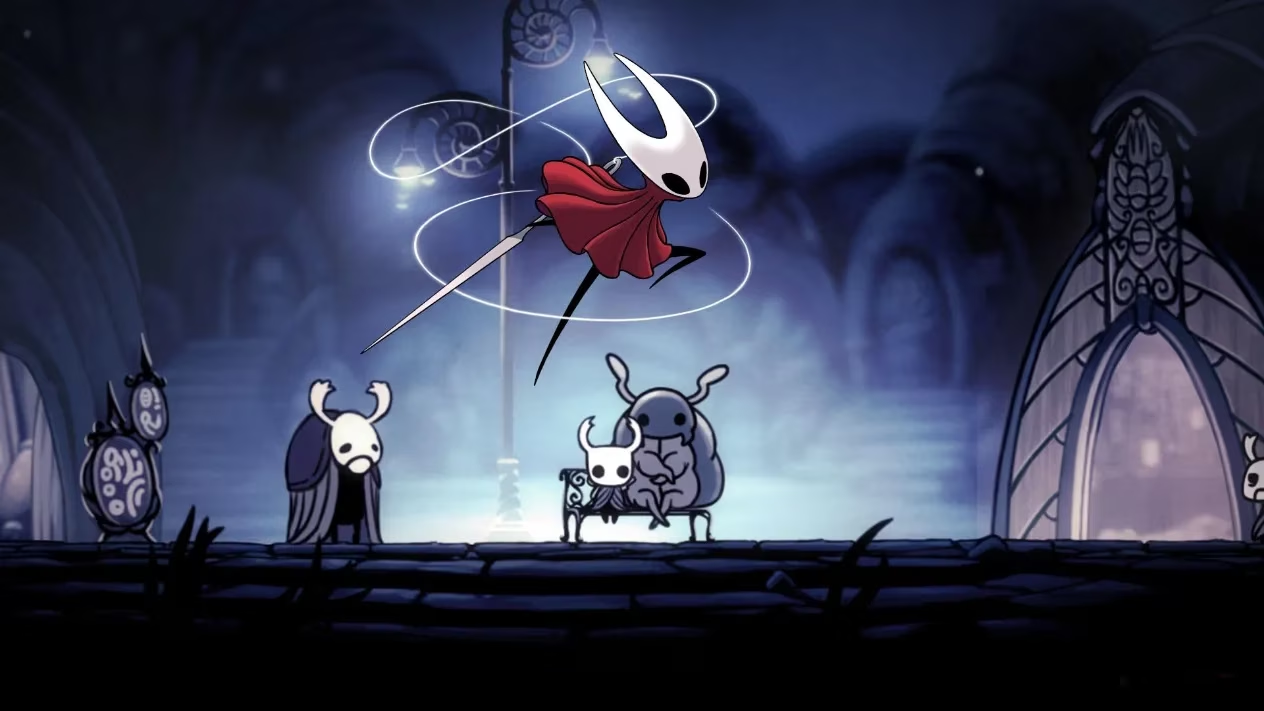
By all accounts, Silksong is a harder game than its 2017 predecessor. Enemies hit harder, bosses are fiercer, platforming demands pinpoint accuracy, and players are forced to adapt from the opening hours. The Bell Beast is one of the earliest skill checks, a large silkworm-like creature that fills most of the screen. It is far from Silksong’s most difficult boss, but it is the perfect encapsulation of the difficulty leap between the two games.
Located in The Marrow, the Bell Beast is likely the second major boss players encounter. Unlike the Moss Mother before it, the Bell Beast does not wait around for the player to attack. For many players, it feels like the first significant challenge in the Metroidvania, and it functions as a proper gate: it ensures players have reached a certain level before they can progress.
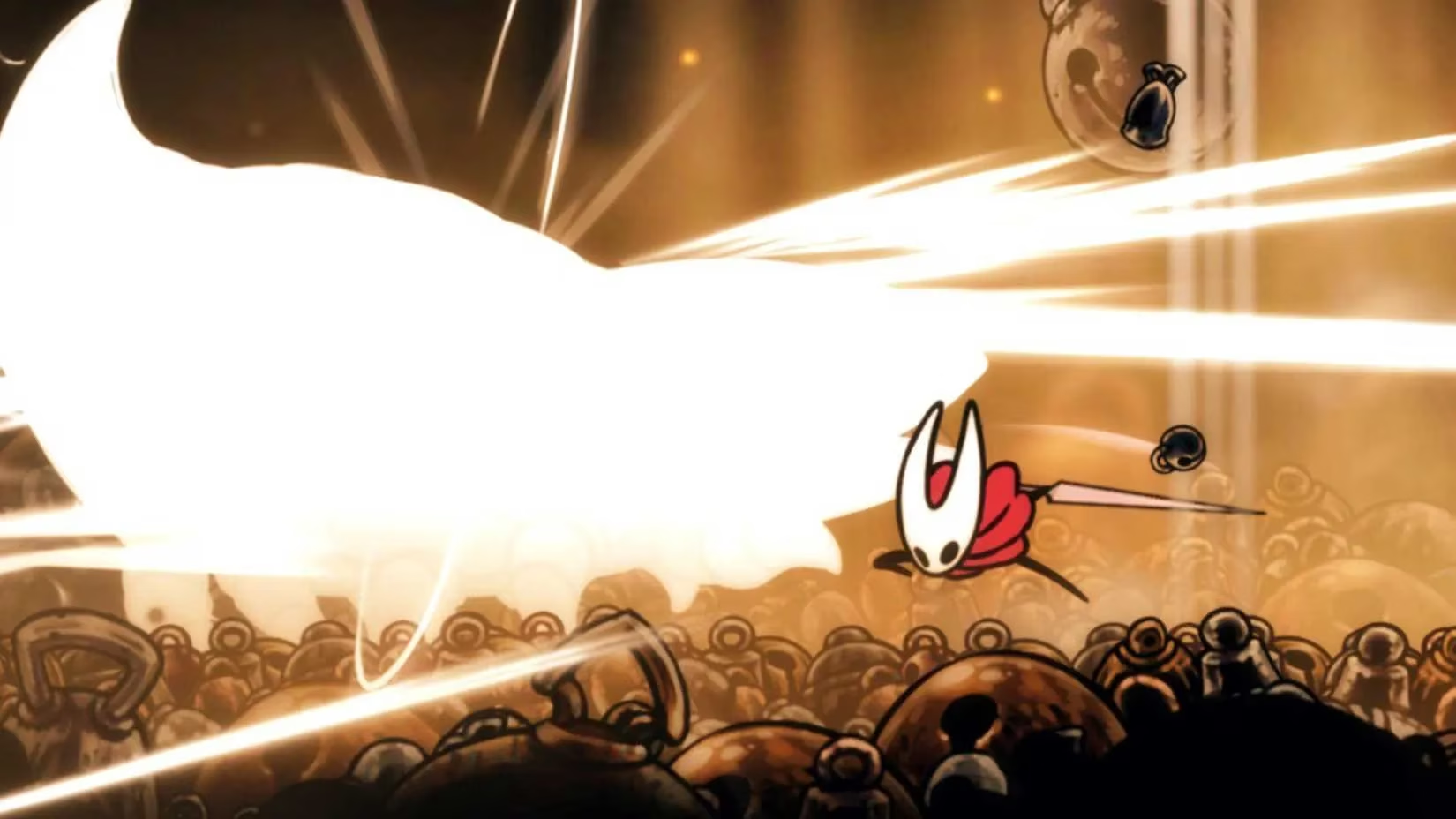
The boss is fast. It can dash across the entire length of the screen in a second or two, and because of its large size, players who do not react quickly will take a hit. That dash also asks players to pogo off the boss’s back mid-attack, meaning an air attack that keeps Hornet airborne until it is safe to land. I found that mechanic to be the real lesson of the fight. Silksong is not just asking for damage; it is asking for controlled movement.
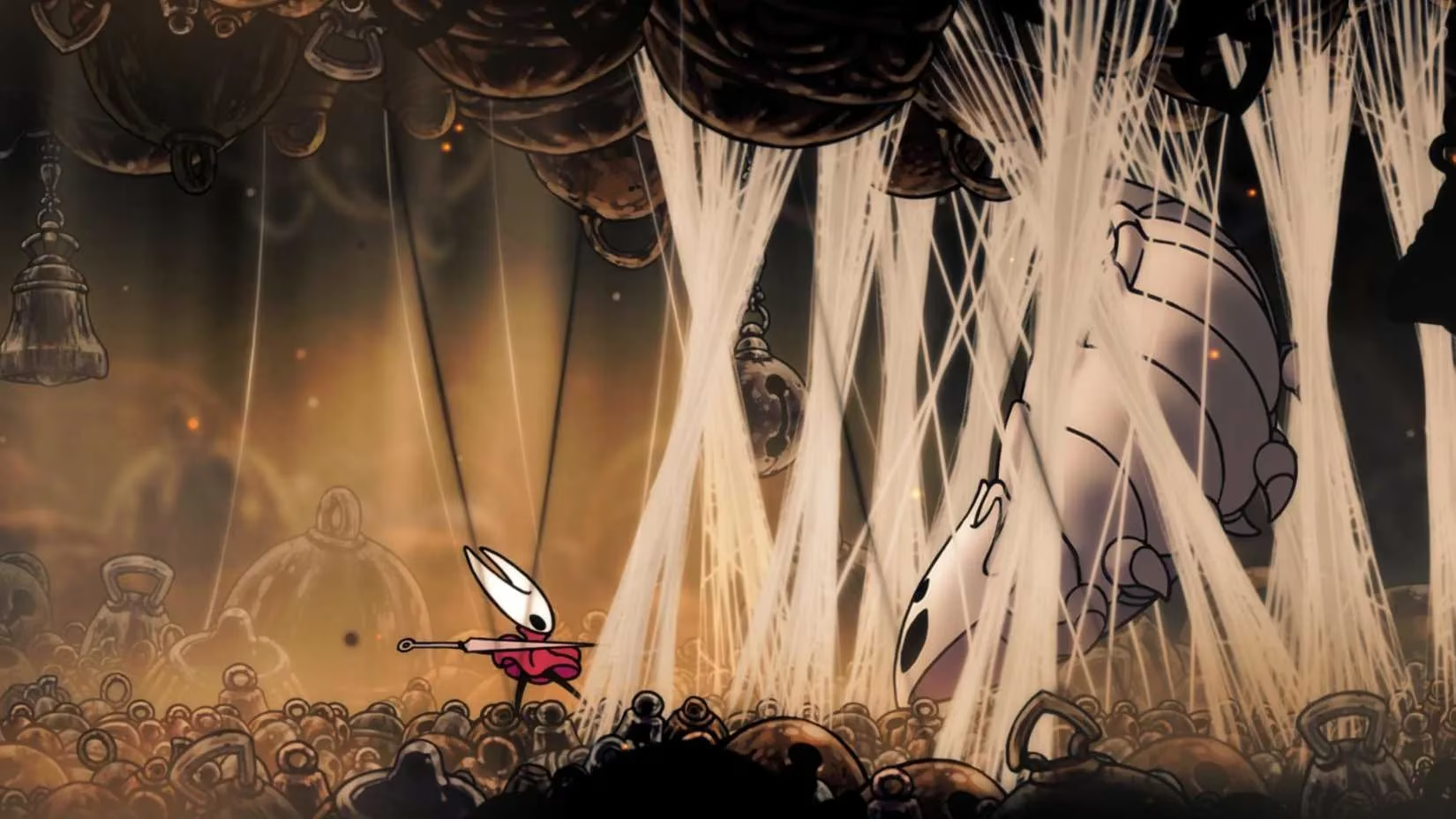
The Bell Beast’s jump attack is a little easier to dodge, but hitting the boss during that window requires Hornet’s upward slash. Its falling bell projectiles are another tricky obstacle, bouncing several times before leaving the stage. That is a lot of mechanics for new players to absorb at once. To make matters worse, the Bell Beast removes two health points whenever an attack lands, which means careless players can die in just two or three hits.
This is where the comparison to Hollow Knight becomes stark. The Gruz Mother of the Forgotten Crossroads is probably the best early-game analogue. The Gruz Mother is faster and larger than many first bosses, but it has only two distinct attacks. Both can be avoided without advanced techniques like pogoing, and both deal only one point of damage. The Bell Beast demands more movement, more precision, and more respect from the player.
| Early boss | Game | Damage per hit | Key demand |
|---|---|---|---|
| Gruz Mother | Hollow Knight | 1 Mask | Simple dodging and basic attacks |
| Bell Beast | Silksong | 2 health points | Pogoing, upward slashes, projectile awareness |
The real proof of the sequel’s increased difficulty, however, is not just the fight itself. It is what the fight locks away. Fast travel is tied to the Bell Beast’s defeat. In Hollow Knight, all players needed to do to unlock fast travel was find the first Stagway and pay a small sum of Geo to call the speedy beast. Silksong makes players earn that convenience through combat.
That design choice is not a major issue in practice. Most players will have visited only two or three locations by the time they reach the Bell Beast. But it is a strong symbol of the step up between the two Hollow Knight entries. The sequel does not hand out safety nets early. It asks players to prove they can handle the basics before it opens the map.
As a player, I appreciate that approach more in hindsight than I did in the moment. The Bell Beast killed me more than once, and each loss made the fight’s language clearer: stay mobile, use the upward slash, pogo with purpose, and do not panic when the bells start bouncing. By the time I won, I was not simply stronger in the stats sense. I was better at Silksong’s rhythm.
That rhythm persists throughout the sequel’s runtime. The Bell Beast is an early statement of intent, not an outlier. It shows that Silksong has taken the original game’s high level of difficulty and treated it as a challenge unto itself. For veterans, that is exciting. For newcomers, it is a warning. The first real skill check is here, and it rings loudly.
Leave a Comment
Comments