Hornet darts across a crumbling ledge, needle flashing in the dusty light of a new kingdom. Every second demands precision, every missed parry a trip back to the last bench. Hollow Knight: Silksong is a masterpiece of tension, but for many players since its long-awaited release in 2025, the most persistent foe doesn't reside in the Citadel or the Coral Depths. It lurks in the real world, tightening its grip around the tendons and joints of the very hands that hold the controller. Over a year later, in 2026, countless fans are discovering that the game's true final boss might be their own wrists.
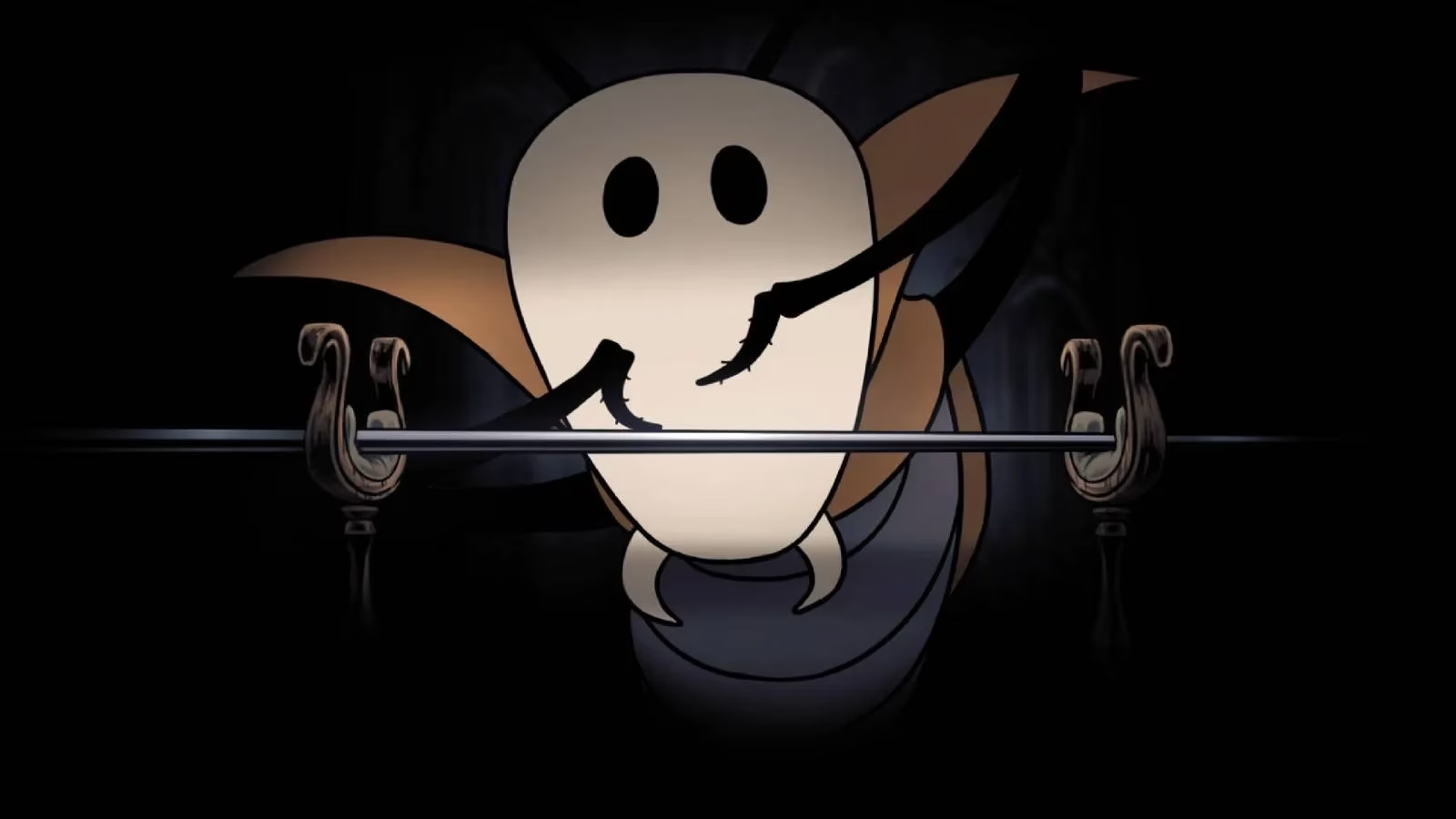
The reason is as simple as it is sneaky. Silksong demands a specific kind of attention, one where the body locks into a statue-like posture: elbows bent, fingers hovering over triggers, thumbs dancing across face buttons in rapid, repetitive patterns. Every boss fight, from the early-game Skarrgard to the infamous Last Judge, feels like a frantic concerto played on a plucked controller. In these moments, a player's grip often tightens into what can only be described as a death clutch, much like a rock climber white-knuckling a ledge during a storm. That sustained tension, paired with hours of near-continuous input, turns the hands into overworked springs—eventually they lose their bounce and begin to groan with every press.
This is where carpal tunnel syndrome and similar repetitive strain injuries slip in like an invisible poison. A gamer might first notice a dull ache after a three-hour session, then a sharper twinge that lingers into the next morning. Soon, even holding a coffee mug becomes a reminder of that last attempt at the Glade of Bone. The irony is thick: Hornet can dash, pogo, and heal herself mid-combat, but the player outside the screen has no such quick fix.
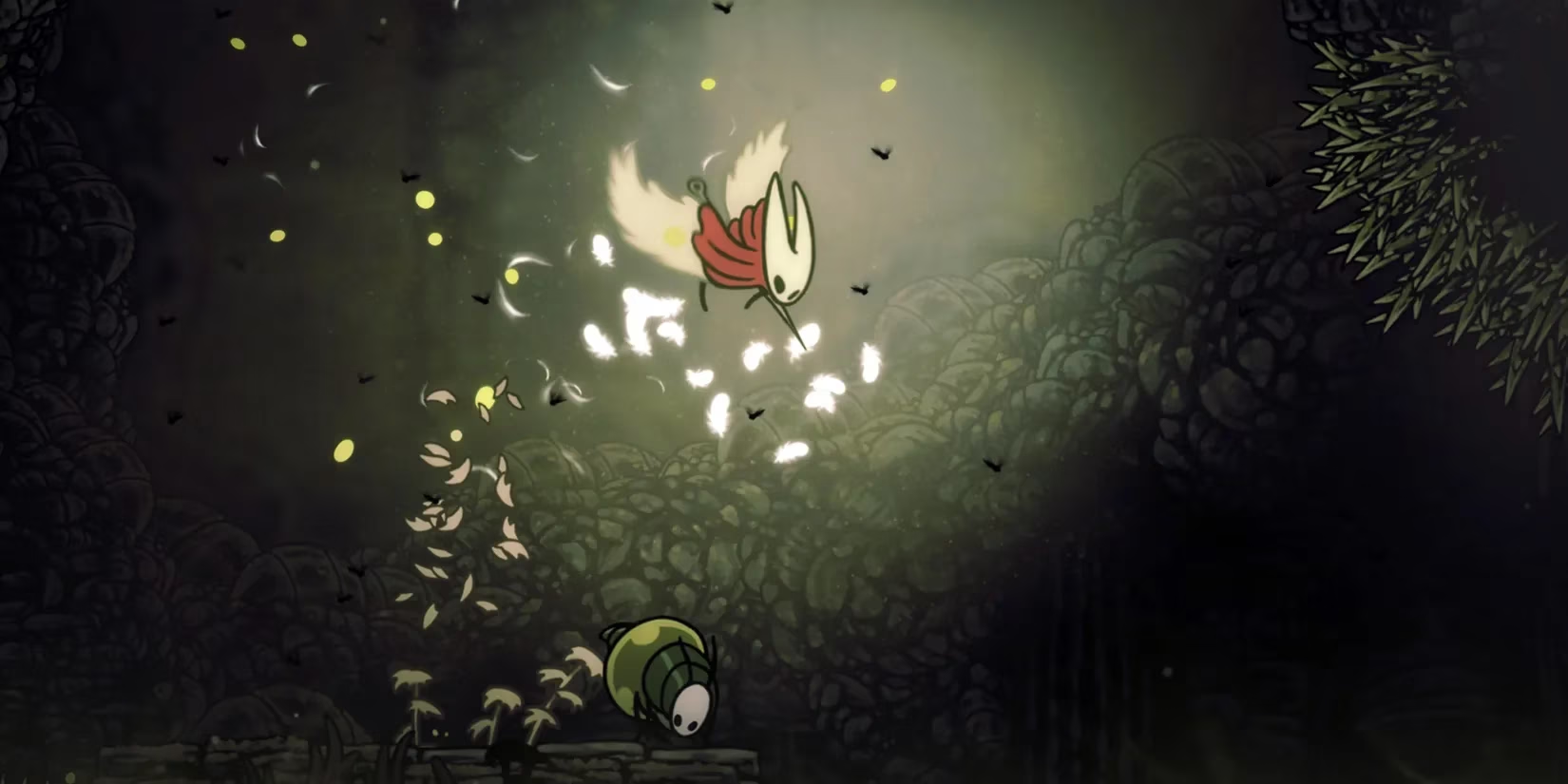
Thankfully, the community hasn't had to face this threat alone. In the days following Silksong's launch, a physical therapist named Elliot (known as elliot226 on the Hollow Knight subreddit) shared a PSA that quickly became legend among sore-wristed explorers. Titled “Silksong is Here and So is the Wrist Pain! Here's how you can fix it,” the guide introduced a deceptively simple analogy: the body has its own hidden HP system. Every repeated claw-grip, every tensed thumb press, subtracts from a finite pool of tissue tolerance. Once that HP reaches zero, pain and inflammation take over.
The solution, Elliot explained, isn't to stop playing altogether—it's to manage the resource between battles. He broke down a series of exercises designed to regenerate that physical HP. One essential move is the prayer stretch: palms pressed together in front of the chest, fingers pointing up, then slowly lowered toward the belly until a gentle stretch blooms across the wrists and forearms. Another is the wrist extensor stretch, where one arm extends straight out, hand bent downward, and the other hand pulls the fingers back ever so lightly. Held for 20 to 30 seconds per side, these movements act like a save point for the tendons, giving them a chance to recover before the next boss rush.
Beyond exercises, the rhythm of play itself matters enormously. Speedrunners, who have already pushed Silksong completion times under an hour, often rely on near-continuous play, which can be devastating without safeguards. For ordinary mortals, building intentional micro-breaks into every session becomes a shield. A five-minute pause after each major area not only rests the hands but also refreshes the mind—making that next encounter with the twin Skarrgards feel slightly less impossible. Some players have adopted the practice of adjusting grip pressure consciously, learning to hold the controller as if cradling a fragile bird rather than wrestling a serpent.
The beauty of Elliot’s advice is how it transforms an external threat into a manageable part of the gaming ritual. It turns the wrist into a co-op partner that needs buffs and heals, much like Hornet’s own tools. And for those who wonder if all this care is worth it, consider how many hidden chambers, needle upgrades, and haunting melodies are still waiting to be uncovered. Silksong's world is too rich to be abandoned because of something as mundane as wrist pain.
So the next time Hornet falls from a lace bridge and the respawn screen flickers, perhaps the best strategy is not to immediately hurl yourself back into the fray. Instead, let the hands fall to their sides, give them a few circles and stretches, and remember: the game's challenges are designed to be conquered, but the body's limits deserve respect. After all, no number of silk threads can stitch a tendon back together—that part of the journey is entirely offline.
Leave a Comment
Comments