The year is 2026, and the gaming world is still buzzing louder than a furious Hive Guardian over the arrival of Hollow Knight: Silksong. Ever since it finally, mercifully, graced our consoles this past September, the collective consensus has been a resounding, almost deafening, "Masterpiece!" And why wouldn't it be, darling? The artwork is so stunning it could make a grown gamer weep, the music is a symphony for the soul, and the sprawling, haunted Kingdom of Pharloom is packed tighter with lore and secrets than a grub family reunion. The character work is so sharp it could draw blood, and Hornet herself? She’s not just a protagonist; she’s a whole vibe, a crimson-clad ballet dancer of death with a move set so nimble and an arsenal so vast it would make any warrior bug green with envy. It is, in so many ways, an almost perfect game. But, like a perfectly crafted rosary skipped on a single cracked bead, there’s a nasty little worm in the silk.
A massive schism has erupted in the fanbase, a civil war more brutal than anything in Deepnest. On one side, the ardent defenders, screaming "GIT GUD!" at any whisper of criticism, as if the only conceivable reason for a complaint is that the player is a bumbling novice who doesn't know their needle from their thread. Now, whether the game is objectively too difficult is a conversation for another day, a subjective rabbit hole akin to arguing about the best flavor of rancid egg. But let's be crystal clear, perfectly polished obsidian clear: Silksong is NOT the flawless Eldritch idol its most fervent worshippers proclaim it to be. If it were, this monumental divide wouldn't exist. Period. The truth, whispered by those who have stared into the abyss and 100%-ed it, is far more frustrating.
Having personally poured sixty hours into wrestling this beautiful beast into submission, achieving a full 100% completion with all mask shards, silk spools, and needle upgrades, unlocking every single tool, fully powering every crest, completing every wish, and witnessing every single ending, this writer can say with absolute confidence: Silksong would be that perfect, transcendent experience so many claim it is if it weren't so utterly, achingly dead set on one thing—wasting your precious time. We're talking about a deliberate, almost toxic design philosophy built on a foundation of shards, marathon runbacks, marathon-ier gauntlets, and what I can only describe as developer-sanctioned pranks and add spam. None of this is necessary, and all of it does nothing but transform your majestic journey through Pharloom into an arduous, eye-rolling slog.
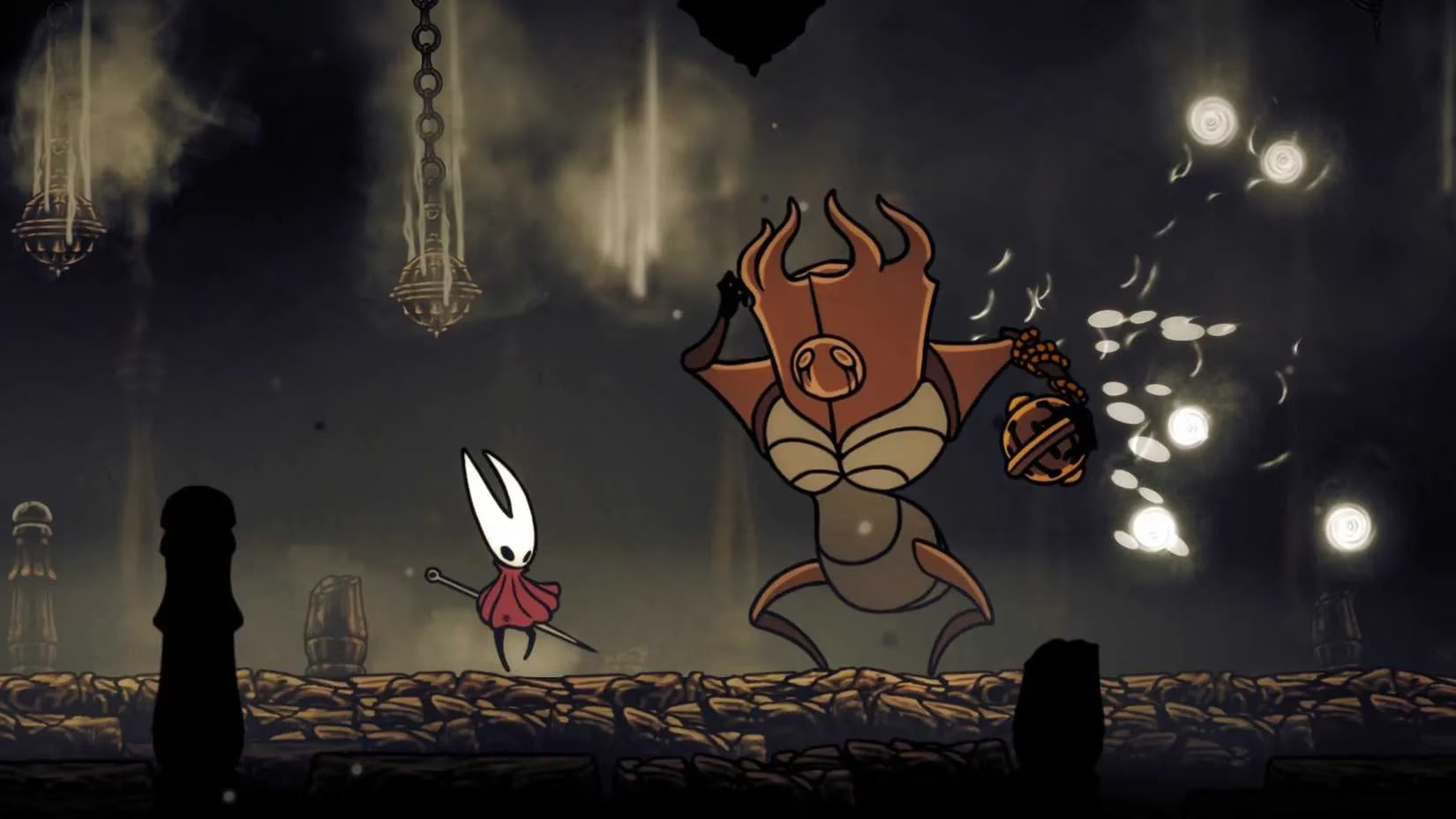
The "Git Gud" Brigade vs. The Wasted Hours
Before the defenders of the faith descend with their furious downvotes and cries of "skill issue," let's lay out the credentials, shall we? This isn't a salty casual speaking from a place of defeat. Most bosses were cleared with swift, surgical precision. Sister Splinter, a nightmare for many, was a second-attempt victory. Pre-patch Moorwing, a notorious wall, went down after a respectable seven tries. Even most of the game's grueling gauntlets, save one particularly egregious offender, were conquered in one or two attempts. The struggle wasn't against an insurmountable challenge; it was against a system actively, maliciously padding out the experience. The two biggest culprits? The shard system and the positively archaic runbacks. They didn't make the game harder; they made it a part-time farming simulator.
The Runback: A Punishing Relic of a Bygone Era
Let’s parry the arguments for these excruciating corpse-runs right out of the gate. Yes, yes, they’re a "penalty for death" and a "chance to master movement." Horsefeathers! Absolute balderdash! Dying to a boss is already the penalty. You failed, you spectacularly ate it, and now you must internalize that L and figure out a strategy. Forcing a player to parkour through seven screens of hazards and respawning mobs just to ring the boss doorbell again doesn't add a layer of thoughtful punishment; it just adds a thick, gooey layer of time-wasting frustration. I do not, and will never, appreciate being made to practice my pogo-jumping skills when the singular, burning desire of my soul is to just fight the dang boss!
In a shocking twist, not all runbacks are made of pure nightmare fuel. Coincidentally, the very best, most mechanically complex and rewarding bosses—First Sinner, Seth, the elegant dance of Lace, the punishing rhythm of Skarrsinger Karmelita—boast runbacks so short they're practically a gentle nod. With these paragons of boss design, there's no arbitrary waiting period. You stand up, dust off your cloak, and vwoop, you're back in the fray. They respect your time, and more importantly, they respect your journey as a player, just like almost all of the original Hollow Knight's best encounters. The rest are a spiteful educational video on what not to do.
The Shard System: An Economy of Misery
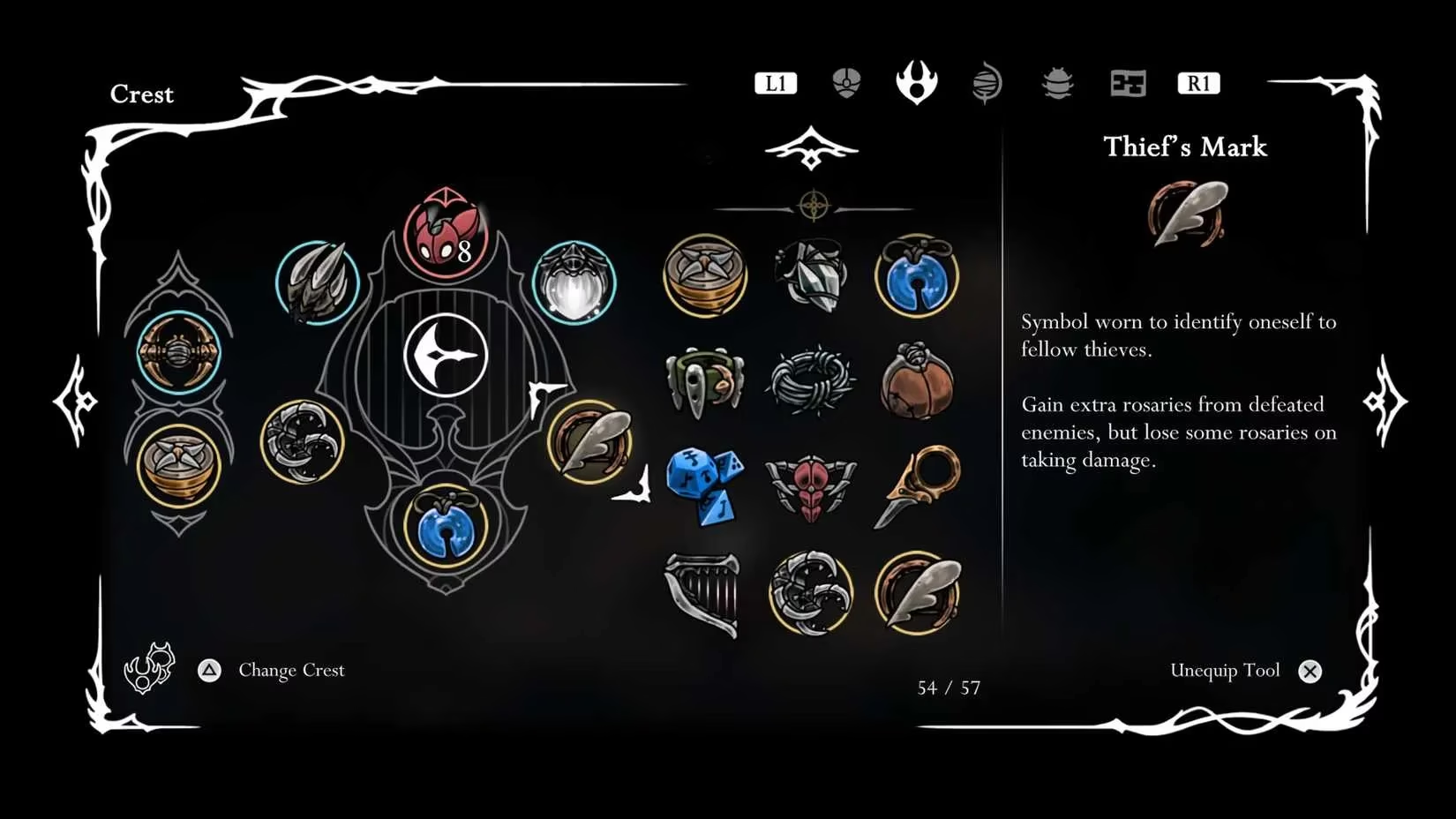
And then, oh boy, then there are the shards. If runbacks are a time-wasting felony, the shard system is a capital crime against gaming joy. Let's be blunt: this mechanic could be surgically removed from Silksong’s code, launched into the void, and absolutely nothing of value would be lost. The game practically screams at you to use your vast array of incredibly powerful, often needle-out-damaging tools. They’re flashy, fun, and central to Hornet's identity. Yet, for some baffling reason, using them too much is a punishable offense!
The shard limit was arguably meant to stop players from crutching on tools, but that’s not how the psychology of the thing works. My internal monologue upon running out never became a stoic "Alas, I am out of shards. I suppose I shall overcome this challenge with my base needle." It was a furious "Oh, for the love of all that is unholy, NOW I have to stop my thrilling boss progression to go on a mind-numbing rosary farm!" It did nothing to stop me from spamming my favorite tool; it just forced an intermission of tedious garbage before I could. You know where this system is proven spectacularly irrelevant? In the memory boss encounters, where resources are set. There, you use what you need, save what you don’t, and the encounter's own limit is the balancing factor. It’s perfect. It’s pure. The rest of Silksong is just a farming sim in a Ghibli fighting game's clothing.
Screens Filled with Cheap Deaths and Clownery
Beyond the two-headed hydra of time-wasting, other "features" lurk, delivering cheap deaths that lead directly back to the same problem. Chief among these are the overstuffed gauntlets. The first Hollow Knight had them, sure, but they were generally compact, punchy affairs, with the worst relegated to the entirely optional Colosseum of Fools. In Silksong, it feels like Team Cherry was gunning for a constant "edge of danger" vibe, which is a noble goal. But there’s a Grand Canyon-sized gap between a heart-pounding two-wave battle and a soul-crushing, seven-wave screen-filling marathon of doom. The former is a flex; the latter is a chore that leads to a cascade of "unfair" deaths, not from a single, powerful foe, but from a sheer, screen-cluttering numbers game.
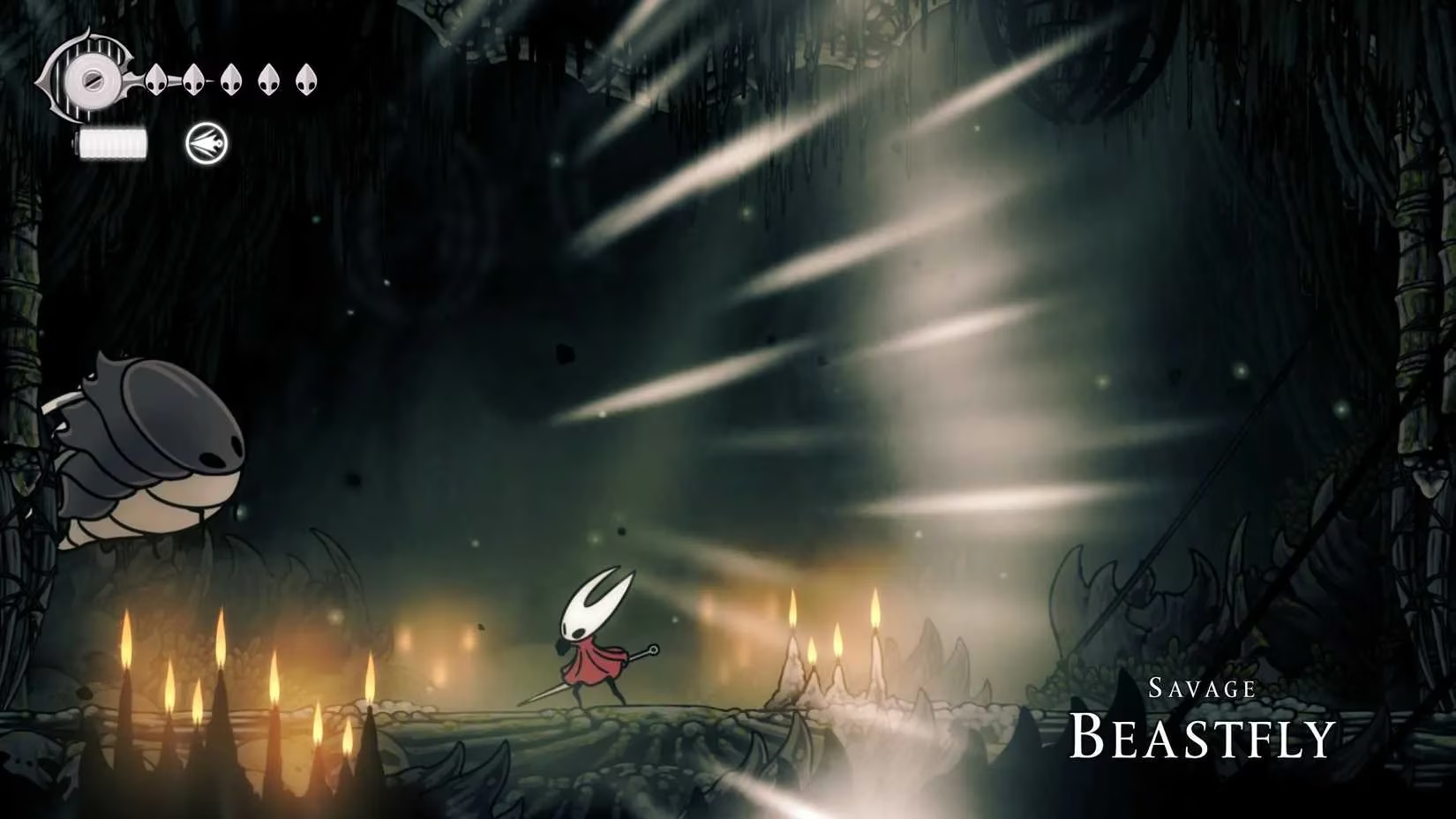
This philosophy painfully extends to bosses who are mechanically simpler than a dirtcarver but are made "difficult" through obnoxious add spam. Suddenly, the fight isn't about a dance with one opponent; it's a frantic, migraine-inducing juggling act of tracking the boss and a swarm of independently operating enemies. Enemies that, more often than not, soak up multiple hits or require a precious expenditure of silk just to clear. The result, once again, is an avalanche of wasted time and deaths that feel less like a lesson learned and more like a cheap shot from a bully.
And then, the pièce de résistance of disrespect: the bench pranks. Found in Hunter’s March, Bilewater, and Sinner’s Road, these are the developer's practical jokes. In three separate, extremely inconvenient locales, the game pulls a fast one. The first is a literal double-damage trap, an actual "gotcha" moment. The next two are cruel psych-outs in high-stress areas that force you to hunt for secrets just to get your basic checkpoint functionality back. It might have been a cheeky, memorable bit of fun if deployed once in a safe, clever spot. But three times? In life-or-death zones? That’s not a joke. That’s a dirge. A funeral for your ten-minute shard-farming session. Thanks for the giggle and the utterly wasted time, Team Cherry. Haha.
Look, after all this fervent complaining, let this be the final word: Hollow Knight: Silksong is still a monumental achievement, a game of staggering beauty, profound lore, and intoxicating combat. The love for its art, its music, its world, and for Hornet’s incredible journey is deep and genuine. I have immense love for it. But that love is perpetually tarnished by a design philosophy that too often feels less like a challenge to be overcome and more like a cynical, deliberate attempt to inflate game time. It’s a five-star diamond that’s been inexplicably, frustratingly dipped in mud.
Leave a Comment
Comments